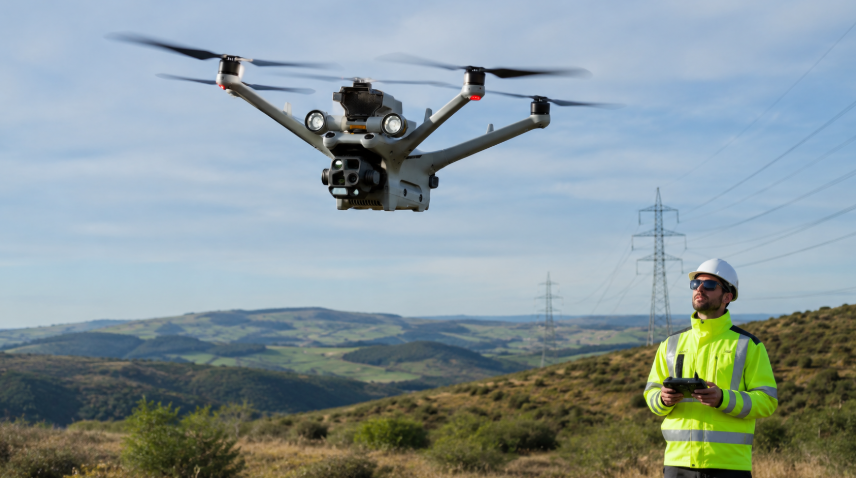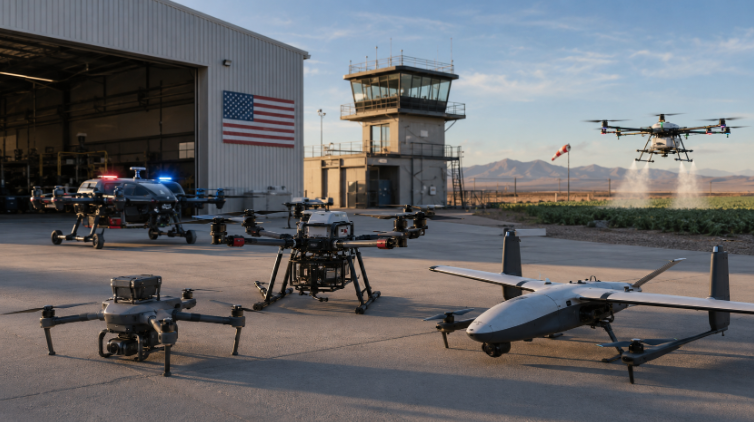
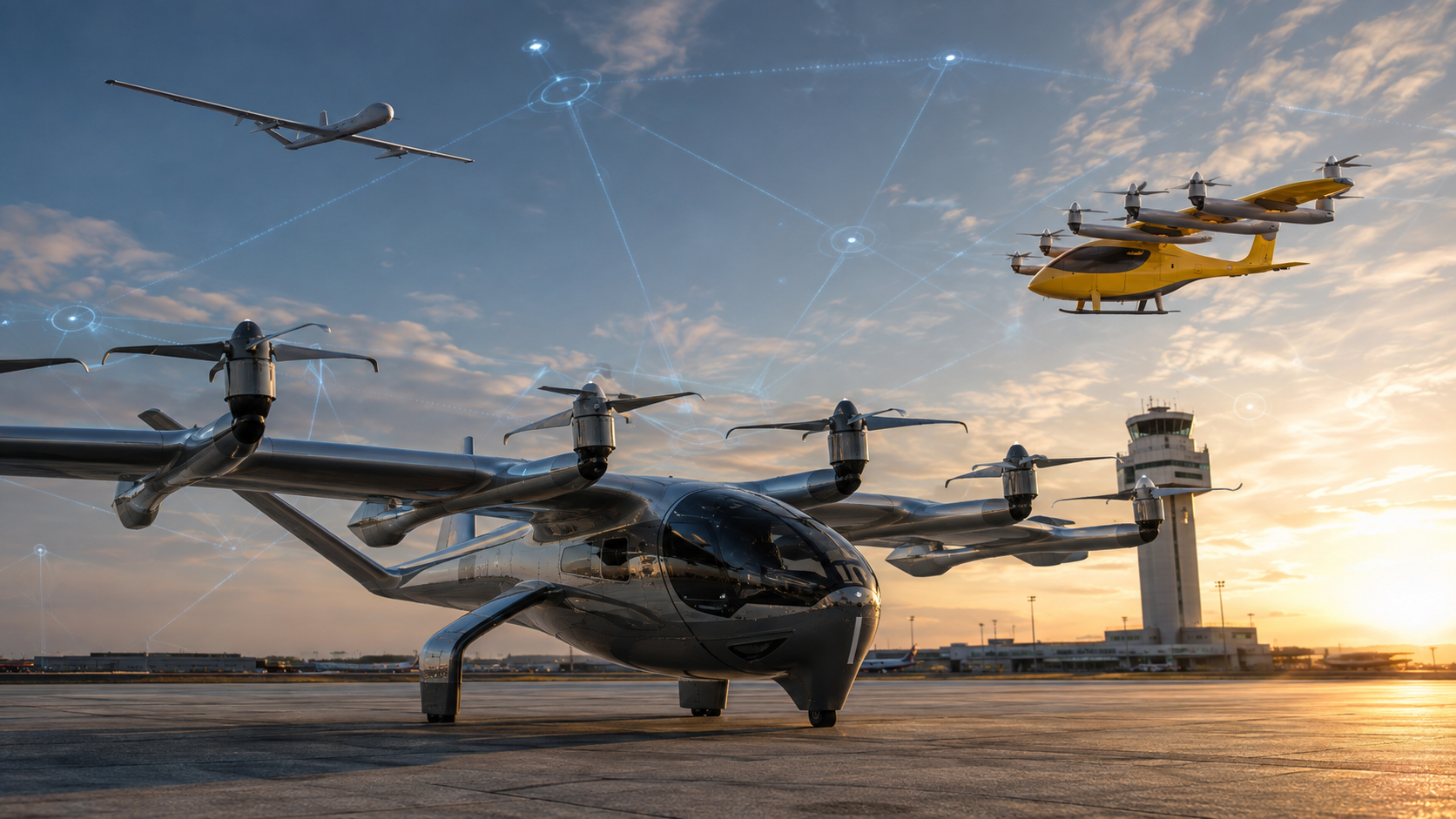
Three companies are moving from Boeing to Archer Aviation under one proposed transaction.
What’s the connection between them?
Wisk Aero is developing an autonomous passenger-carrying electric vertical takeoff and landing aircraft. Insitu builds long-endurance uncrewed aircraft used heavily for intelligence, surveillance and reconnaissance. SkyGrid develops software and services intended to manage highly automated aircraft in shared airspace.
Archer, meanwhile, is best known for Midnight, its electric air taxi.
Put the four businesses together and the reasoning behind the deal becomes much clearer.
Archer is trying to own far more of the technology chain required for autonomous aviation. That includes aircraft, propulsion, flight controls, sensors, autonomous decision-making, operational data and the systems that coordinate aircraft in the airspace around them.
On August 10, 2026, Archer and Boeing announced definitive agreements under which Archer plans to acquire Wisk Aero, Insitu and SkyGrid. Boeing will become a major Archer shareholder and retain access to Wisk’s core autonomous-flight technology through a separate collaboration and technology-sharing arrangement.
The transaction has not closed. Archer says it expects completion by the end of 2026, subject to regulatory approvals and other conditions. The underlying purchase agreement also contains a May 9, 2027 termination date, with provisions that can extend it by three months if regulatory approval is the remaining condition.
For anyone working with drones, this deal deserves attention beyond the air-taxi headlines.
It shows what a larger autonomous aviation company may eventually look like.
Why Boeing Will Still Be Connected
Wisk is likely to attract the most attention because it competes in the same broad advanced-air-mobility sector as Archer. However, the transaction is structured around three very different capabilities.
Archer will acquire the equity interests in Wisk Aero, SkyGrid and Insitu, together with related entities including Insitu Pacific, Wisk Australia and Boeing Emirates, according to Archer’s Form 8-K filed with the U.S. Securities and Exchange Commission.
Boeing is not simply receiving cash and walking away.
At closing, Archer is due to issue Boeing shares equal to approximately 19.75% of Archer’s outstanding Class A shares immediately before closing, subject to adjustments. Boeing will also receive two warrants, each covering $100 million of Archer shares. One has an exercise price of $13 per share and the other $17.88 per share.
Boeing has agreed to a 12-month lock-up on the consideration shares, subject to specified exceptions. The agreement also prevents warrant exercise from taking Boeing’s beneficial ownership above 19.9%, unless Boeing waives that limitation.
There is another important connection.
As long as Boeing maintains a specified ownership threshold equivalent to at least 10% of Archer’s pre-closing Class A shares, it can designate one person for nomination to Archer’s board.
So Boeing may be giving up direct ownership of three subsidiaries, but it is not cutting its connection with their technology.
Instead, it is shifting from owning those companies itself to holding a major position in the company bringing them together.
Archer Is Moving Beyond The Air-Taxi Business
If you knew Archer mainly as the company building Midnight, the scale of the shift becomes clearer when you compare the acquisition with Archer’s existing financial position.
Archer reported only $5 million in revenue for the second quarter of 2026. Of that, $3 million came from fixed-base-operator activities at Hawthorne Airport, $1 million from leasing and $1 million from other sources. Revenue for the first six months of 2026 was $6.6 million.
At the same time, Archer recorded a $263.2 million net loss in Q2 and a $480.9 million net loss for the first half of 2026. Net cash used in operating activities during the first six months was $305.5 million.
The balance sheet gives Archer room to move. It ended June with $1.5606 billion in cash, cash equivalents and short-term investments.
Still, there is a large difference between funding aircraft development and owning a mature business that already earns money from operational UAS.
That is where Insitu changes the story.
Insitu Gives Archer Revenue Immediately
Archer says Insitu generates more than $200 million in annual revenue, operates profitably and has customers across 35 countries.
Compare $200 million with Archer’s $5 million of revenue in its latest quarter and you can see why Insitu is strategically important.
Archer does not have to wait for widespread passenger eVTOL operations to begin before gaining a substantial aviation revenue stream.
It is buying one that already exists.
That makes Insitu much more than another drone manufacturer joining the portfolio.
It changes the timing of Archer’s business.
Insitu Brings Something Archer Cannot Quickly Build
Insitu has spent decades operating aircraft in environments where endurance, communications, sensor performance and reliability matter every day.
Its ScanEagle and Integrator aircraft are used for intelligence, surveillance and reconnaissance missions. Insitu says its UAS have accumulated more than 1.6 million operational flight hours, have served customers from 35 nations, and have been operated from more than 45 classes of ships and land sites across six continents.
That experience cannot be reproduced simply by designing another aircraft.
Operational hours produce data.
They expose aircraft to changing weather, difficult communications environments, maintenance cycles, launch and recovery events, payload changes and real customer missions.
Archer’s shareholder letter says Insitu has manufactured more than 4,000 Group 2 and Group 3 UAS and describes its fleet as having flown nearly two million autonomous flight hours. Insitu’s own May 2026 company information uses the more conservative figure of more than 3,500 UAS manufactured and fielded and more than 1.6 million operational hours. The difference likely reflects differing definitions or timing, so the safest conclusion is that Archer is acquiring a fleet with well over one million real operational hours behind it.
For autonomy development, that is valuable.
ScanEagle And Integrator Are Very Different From Air Taxis
Insitu’s current aircraft also expose Archer to missions far removed from short urban passenger flights.
ScanEagle can remain airborne for more than 18 hours and carry roughly 17 lb of payload. Integrator can fly for as long as 27.5 hours, carry up to 50 lb across 10 payload locations, and has a stated point-to-point range of up to 2,000 nautical miles.
Insitu says Integrator can also spend about 13 hours on station at a distance of 500 nautical miles before returning to refuel. The company offers more than 1,000 potential configurations across the ScanEagle and Integrator families, including electro-optical and infrared sensors, communications relay equipment, electronic-warfare systems, wide-area search sensors and other payloads.
Those numbers are key when you look at Archer’s newer aircraft plans.
In July, Archer and Anduril unveiled a new hybrid-electric autonomous VTOL platform. The commercial version is called Halo, while Anduril’s defense version is called Thunder. Both use the same basic airframe, hybrid powertrain and core systems, with mission-specific payloads.
Archer now wants to combine its newer autonomous VTOL programme with an established UAS company that already understands persistent uncrewed operations.
That can shorten a very long learning process.
Wisk Gives Archer A Much Deeper Autonomy Programme
Insitu brings deployed UAS experience. Wisk contributes a different body of knowledge.
Wisk has designed and flown six generations of eVTOL aircraft. Its history includes more than 1,700 flight tests, with more recent company material putting the number above 1,750 before the Generation 6 test programme began.
Generation 6 is being developed as an autonomous passenger-carrying aircraft with human supervision from the ground.
The momentum continues at Wisk. ✈️
— Wisk (@WiskAero) March 17, 2026
We’ve officially added our second Gen 6 aircraft to our flight test fleet. More aircraft means more flights, more data, and more learnings—all building towards a safer introduction of autonomous air taxis.https://t.co/p9PFAtet7X#Wisk #AAM pic.twitter.com/4pwDqRJLGG
The first Generation 6 aircraft flew in December 2025, and a second entered flight testing in May 2026. As of August, Wisk says it is actively flight-testing two Generation 6 aircraft in Hollister, California.
The aircraft has a 50-foot wingspan, is designed for four passengers and has a stated range of approximately 90 miles. More important than those specifications, however, is the system behind the aircraft.
Wisk has been developing flight-control computers, onboard sensors, radar, detect-and-avoid capability, ground supervision and the procedures required to integrate an uncrewed passenger aircraft into controlled airspace.
That work is difficult to buy one component at a time.
Archer And Wisk Were Already Moving Towards Each Other
There is some history behind this acquisition.
Wisk and Archer were once opponents in a major intellectual-property dispute. In 2021, Wisk sued Archer over alleged trade-secret theft and patent infringement. Archer counter-sued.
The companies settled in August 2023.
More importantly, the settlement was accompanied by an autonomous-flight collaboration. Archer agreed to make Wisk its exclusive autonomy provider for future aircraft variants, while Boeing participated in a $215 million Archer funding round alongside investors including Stellantis and United Airlines.
Boeing had previously invested $450 million in Wisk, according to reporting on the company’s development, before making Wisk wholly owned.
So Archer acquiring Wisk in 2026 is not a sudden decision to bolt autonomy onto its aircraft.
The relationship has been developing for several years.
Wisk May Reach Archer’s Defense Aircraft Before Its Air Taxis
One of the more revealing details appears in Archer’s Q2 shareholder letter.
Archer says it intends to apply Wisk technology first to Halo and Thunder, its autonomous hybrid VTOL platform, and later bring that experience back into passenger air taxis when regulators are ready to certify autonomous passenger operations.
That tells you a lot about the likely development path.
Commercial passenger aviation has an extremely demanding certification process. Autonomous passenger operations introduce additional questions around detect-and-avoid, remote supervision, system redundancy, communications and responses to abnormal situations.
Defense and other uncrewed missions can provide another route for maturing some of those technologies.
Halo and Thunder are designed without an onboard pilot.
Archer says Halo uses a series hybrid-electric powertrain and dual tiltrotors, can take off and land vertically, and is intended for long-range missions carrying substantial payloads. The company has identified offshore energy, freight, humanitarian support and medical cargo among potential commercial applications.
Now add Wisk’s autonomous flight controls and sensing, Insitu’s long-duration UAS experience and Archer’s existing propulsion and manufacturing work.
You start to see one shared technology base serving several aircraft rather than separate development programmes operating in isolation.
SkyGrid Completes The Missing Layer
Aircraft autonomy can solve many problems onboard.
It cannot by itself organise an airspace containing large numbers of crewed and uncrewed aircraft.
That is where SkyGrid fits.
SkyGrid develops ground-based airspace services intended for highly automated aircraft operations. Its systems are aircraft-agnostic, meaning they are intended to work across different vehicle types rather than being tied to one particular drone or eVTOL.
Think about what happens when autonomous aviation scales.
One aircraft must understand its own position, route, health and surroundings. Yet a larger network also has to account for other aircraft, temporary airspace restrictions, weather, airport traffic, route conflicts and changing operational conditions.
SkyGrid has worked on that layer since 2018. Its technology combines data sources into a shared operational picture and supports automated airspace coordination. The company has also worked with NASA on advanced-air-mobility and autonomous-aviation research.
For Archer, SkyGrid becomes especially interesting because of ZEE.
ZEE Connects Aircraft Intelligence With Airspace Intelligence
Archer introduced ZEE, its aviation-specific AI foundation model, in July 2026.
The system is designed around aviation information including ADS-B traffic data, air traffic control communications, maps and charts, aircraft state, terrain and weather. Archer says it can run on-device or on servers, allowing the same underlying approach to be applied across UAS, passenger aircraft and air traffic systems.
Then, on August 5, just five days before announcing the Boeing deal, Archer reported that ZEE had demonstrated real-time prediction of aircraft movement on airport surfaces several minutes into the future.
The company says the system is already being tested at Hawthorne Airport. Archer cited more than 44,000 flights handled daily across the U.S. National Airspace System and said runway-related incidents account for approximately 30% to 40% of aviation accidents globally, figures it used to explain the potential value of better predictive tools for pilots and controllers.
SkyGrid brings another part of that problem.
ZEE is intended to interpret and predict aviation activity. SkyGrid brings airspace data integration and traffic-management functions.
If those technologies can be successfully combined, Archer could eventually sell software and airspace services even when the aircraft using them were built by another manufacturer.
That is a different business from selling air taxis.
The Aircraft, Autonomy And Airspace Layers Start To Connect
You can now arrange Archer’s expanding portfolio into several distinct layers.
At aircraft level, there is Midnight for passenger air mobility, Halo and Thunder for autonomous commercial and defense VTOL missions, and Insitu’s ScanEagle and Integrator families for long-endurance uncrewed operations.
At the autonomy level, Wisk contributes years of autonomous eVTOL development, flight controls, sensor integration, radar and detect-and-avoid work.
At the intelligence level, Archer has ZEE.
At the airspace level, SkyGrid brings traffic-management and airspace-integration technology.
Archer is also building around the physical infrastructure needed to operate electric aircraft. In July, Archer, BETA Technologies and Macquarie Capital announced America’s Consortium for Electric Skyways, or ACES, which aims to establish interoperable electric-aircraft charging at as many as 250 U.S. aviation sites by 2030.
This is where the acquisition becomes more significant for the wider drone sector.
The company is assembling aircraft, autonomy, AI, ground infrastructure and airspace coordination within one broader organisation.
Regulation Is Moving At The Same Time
None of this technology operates independently of aviation regulation.
Just look at FAA’s current Advanced Air Mobility work.
In March 2026, the agency selected eight projects spanning 26 states for its eVTOL Integration Pilot Program. The projects cover areas including urban air taxis, regional passenger transport, cargo, emergency medical operations, autonomous flight and offshore transportation.
Both Archer and Wisk are involved in work connected with the programme.
Meanwhile, the FAA already has powered-lift pilot and operating rules following its October 2024 final rule, and it has been studying how AAM aircraft can share airports and controlled airspace with conventional traffic. Initial operations are expected to rely heavily on existing aviation infrastructure and procedures before more specialised systems develop as traffic volumes increase.
That progression makes SkyGrid easier to understand.
When only a few aircraft are operating, conventional procedures can carry much of the load.
When hundreds or thousands of automated aircraft are operating across multiple networks, the coordination problem becomes very different.
Owning the aircraft alone does not solve it.
Boeing Is Not Completely Leaving Autonomous Aviation
From Boeing’s perspective, the transaction can look like a retreat from Wisk and related autonomous businesses.
The structure is more nuanced.
Boeing is transferring control while retaining economic and technological exposure.
Under the agreement, Boeing will receive its approximately 19.75% Archer stake, warrants and board representation subject to its ownership level. It will also retain access to Wisk’s core autonomous-flight technology for current and future commercial and defense aircraft.
Boeing’s move allows the manufacturer to concentrate investment on its core commercial and defense aviation businesses while retaining exposure to Archer’s future growth. Archer shares rose roughly 14% after the announcement.
For Boeing, that potentially means fewer separate businesses to fund directly.
For Archer, it means access to technologies that Boeing and its subsidiaries have spent years developing.
For the transferred companies, it places Wisk, Insitu and SkyGrid inside an organisation whose strategy is increasingly centred on autonomous aircraft.
There Are Still Major Risks
Combining the pieces on a strategy diagram is relatively simple.
Combining them inside one aerospace company is not.
Wisk is working on autonomous passenger eVTOL certification. Insitu operates mature military and government UAS programmes. SkyGrid builds airspace software. Archer is simultaneously developing Midnight, Halo, Thunder, ZEE, manufacturing capacity, charging infrastructure and new commercial operations.
Those teams have different customers, certification requirements, development cycles and engineering cultures.
Archer also continues to spend heavily.
Its $305.5 million operating cash use during the first half of 2026 was substantially higher than the $198 million used during the same period in 2025. Research and development expenses rose 58.2% year over year for the first six months of 2026, while general and administrative expenses increased 88.4%.
Archer has said it intends to integrate the Boeing businesses without structurally increasing its overall cash burn. That will be one of the important measures to watch after closing.
There is also regulatory risk.
The agreement remains subject to approvals and closing conditions. The technologies being combined will still have to demonstrate the safety, reliability and certification performance demanded by their particular applications.
Buying autonomy expertise does not remove those requirements.
What This Means For The Drone Industry
The most interesting part of the Archer-Boeing transaction may be what it says about where value sits as uncrewed aviation becomes more mature.
For years, much of the commercial drone sector has been organised around the aircraft.
A company built a drone. Another company supplied the payload. Another developed the mission-planning software. Operators then connected the pieces themselves.
That model works well for many current operations.
It becomes harder as autonomy increases.
An aircraft operating routinely beyond visual line of sight or without an onboard pilot depends on a chain of connected capabilities.
It needs reliable propulsion.
It needs flight controls.
It needs sensors.
It needs communications.
It needs to detect traffic and hazards.
It needs software capable of making or recommending decisions.
It needs operational support.
Then it has to fit into shared airspace without creating unacceptable risk for everyone else.
Archer’s proposed portfolio touches almost every one of those layers.
That does not mean every drone company now needs to buy an airspace-management business.
It does suggest that future competition may increasingly revolve around how well companies connect these layers rather than the specifications of a single aircraft.
The Most Valuable Asset May Be Experience
There is one final part of the deal that is easy to overlook.
Flight hours.
Wisk and the Boeing businesses bring close to two million combined flight hours, according to the acquisition announcement. Insitu alone has accumulated more than 1.6 million operational hours, while Wisk has conducted more than 1,700 eVTOL flight tests across six generations of aircraft development.
Those numbers represent more than marketing milestones.
Each flight creates information about aircraft behaviour, sensors, communications, maintenance, human interaction and operational exceptions.
For AI and autonomous systems, real aviation data can be particularly important because rare events often matter.
An autonomous aircraft must deal with routine flights, but aviation safety also depends on what happens when conditions stop being routine.
A sensor becomes unreliable.
A communication link weakens.
Traffic behaves unexpectedly.
Weather changes.
An aircraft system reports a fault.
A planned route is no longer available.
Software trained and tested only in controlled demonstrations has limited exposure to that variety.
A company combining Insitu’s operational history, Wisk’s autonomous flight testing, Archer’s own aircraft programmes and SkyGrid’s airspace data may have a much larger information base from which to develop future systems.
Whether Archer can convert that information into reliable, certifiable products remains to be seen.
But the logic behind acquiring it is clear.
Archer Is Trying To Become A Different Kind Of Aerospace Company
If you look only at Wisk, the August 2026 announcement appears to be consolidation between two air-taxi developers.
If you look only at Insitu, it appears to be Archer buying its way into defense drones and acquiring more than $200 million in annual revenue.
If you look only at SkyGrid, it appears to be an AI and airspace-software play.
The more useful view is to put all three together.
Archer is assembling a company that can build crewed electric aircraft, build long-endurance uncrewed aircraft, develop autonomous VTOL systems, train aviation-specific AI, manage aircraft interactions with shared airspace and support the ground infrastructure those operations require.
There is a long distance between assembling those assets and successfully integrating them.
The transaction still has to close. The companies still have to combine their engineering and commercial operations. Autonomous passenger flight still faces a demanding certification path. Archer must also control spending while developing several aircraft and software programmes at once.
Still, the structure of the deal tells you where Archer believes aviation is heading.
The aircraft is only one part of an autonomous operation.
The systems that allow it to understand its surroundings, make safe decisions, communicate with other infrastructure and operate alongside other aircraft may become just as important.
Archer started as an air-taxi developer.
If the Boeing transaction closes and its integration strategy works, you may need a much broader description for the company that comes out the other side.