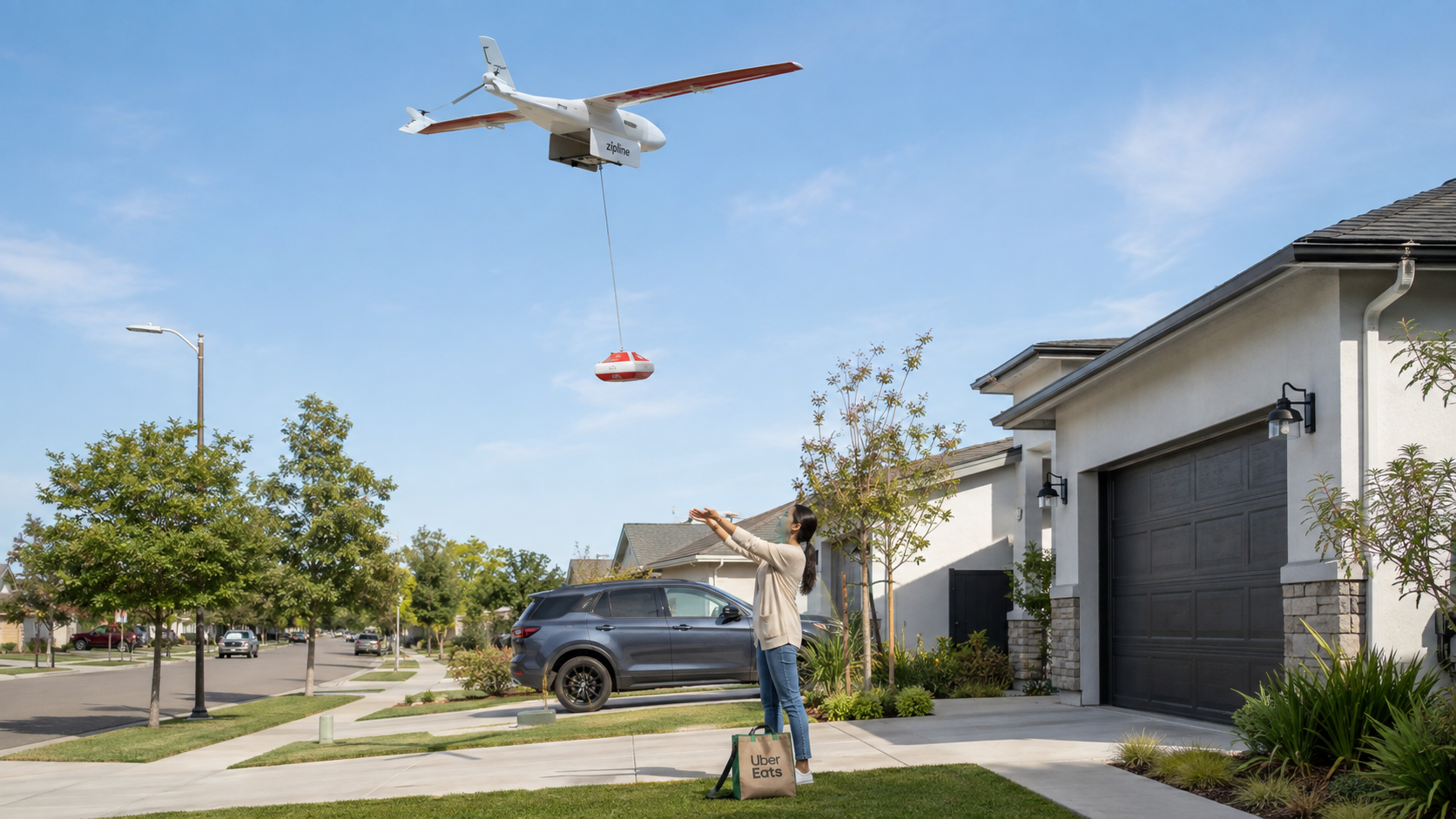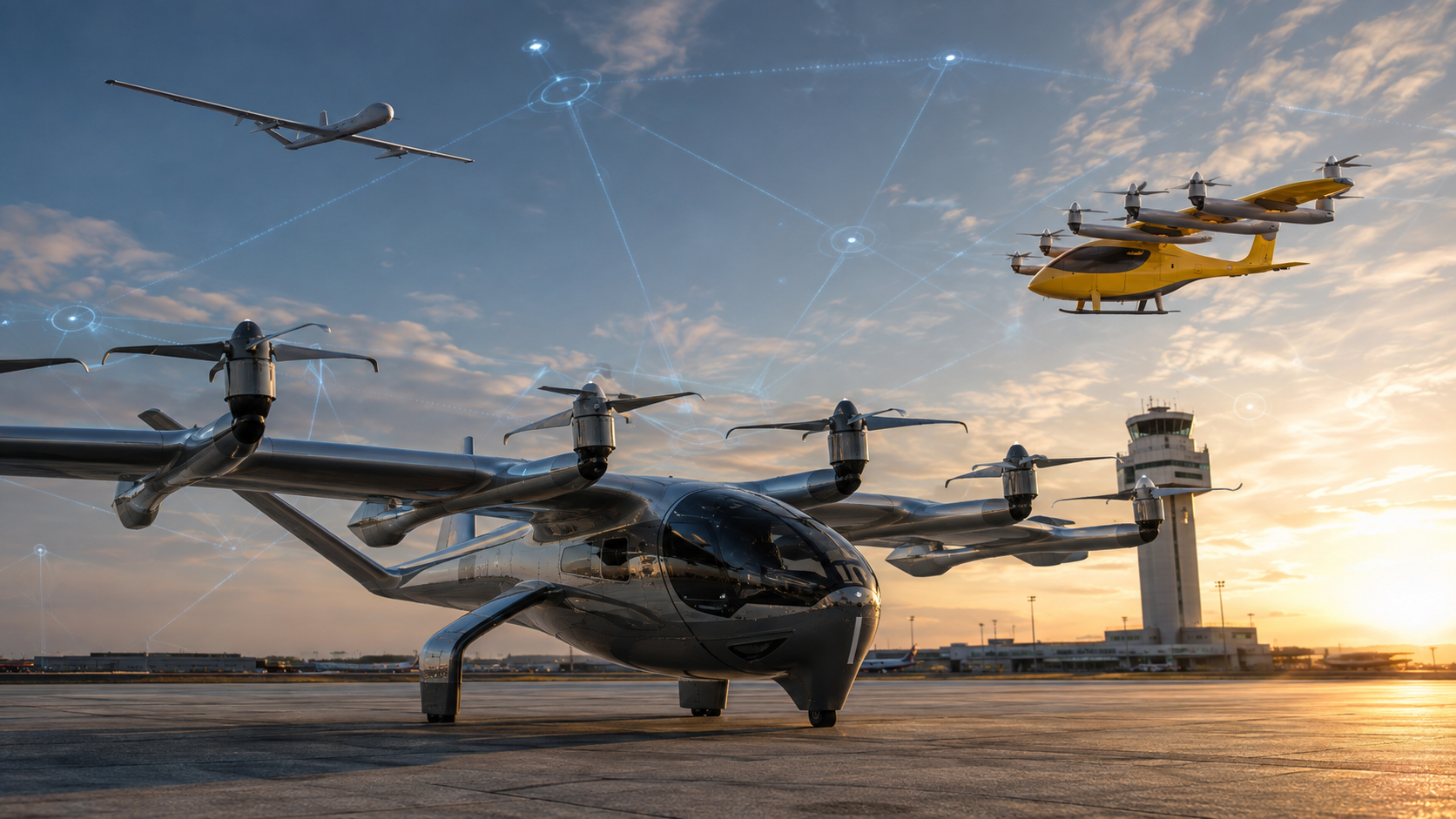
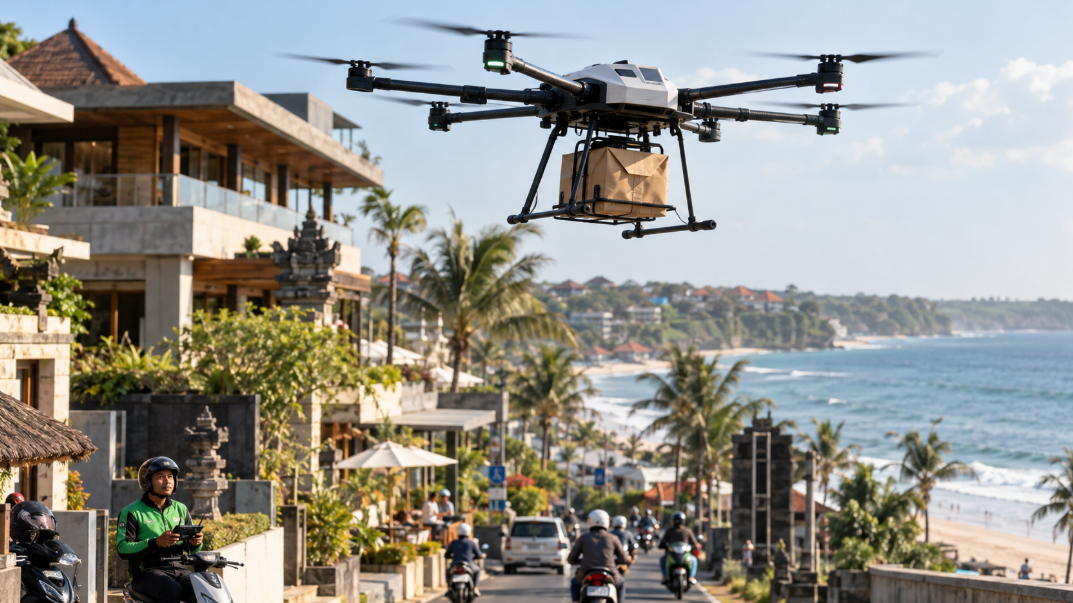
Your next food order in Bali could spend part of its journey above the traffic. A new trial is moving meals by drone between Café del Mar Bali and Nuanu Creative City, pairing an established delivery app with a specialist flight operator and purpose-built aircraft. The interesting question is less about whether a drone can carry a meal. It is whether an aerial leg can fit into the everyday rhythm of food delivery, safely and often enough to be useful.
The project began on 5 October 2026 and is scheduled to run for three months, according to local reporting. Grab Indonesia handles the ordering ecosystem, SKYY Network operates the flights, and American manufacturer A2Z Drone Delivery supplies its Longtail Dual aircraft and automated AirDocks. The partners describe it as Indonesia’s first beyond-visual-line-of-sight (BVLOS) food-delivery operation (claim is attributed to the project partners, not an independently audited national record).
Crucially, the route operates in controlled airspace associated with Bali’s Ngurah Rai International Airport. That makes this a useful test of aviation planning, ground logistics and customer experience all at once. Here is what the trial actually involves, what the aircraft can do, and what still needs proving before more restaurants can send orders skyward.
What Is Happening In Bali Right Now
The test connects two named sites rather than covering the entire island. Café del Mar Bali is the dispatch point, and Nuanu Creative City is the destination area. Nuanu occupies 44 hectares and combines cultural, leisure and community facilities. That creates a contained setting where operators can learn how aircraft, staff, handover procedures and customer orders interact before contemplating a wider network.
The initiative is a proof of concept. Its purpose is to collect real operational evidence on infrastructure readiness, flight requirements, safety, customer experience and integration with the delivery system already used locally. You should not read the announcement as confirmation that every Grab customer in Bali can now select drone delivery. The publicly described service is limited to the pilot corridor and its trial arrangements.
We can look forward to judging the success of the Bali BVLOS food-delivery trial based on actual performance data like daily flight volumes, average delivery times, order completion rates, cost per delivery or weather-related cancellations. These figures will help establish how reliably and cost-effectively the service operates, and whether it is commercially viable for a wider rollout.
The Partners Have Different Jobs
SKYY Network brings aircraft operations and experience with complex BVLOS missions. It is responsible for flying the delivery missions, including the discipline of operating under the authorisation issued for the project. Grab provides a familiar way for consumers to order food and gives the team a working delivery network rather than forcing customers onto a separate experimental ordering service.
A2Z supplies the flying and ground hardware: the Longtail Dual aircraft, AirDocks that receive and charge it, and CloudOS ground-control software for mission planning and oversight. Café del Mar prepares the orders at the dispatch end. Nuanu provides the receiving environment and an opportunity to examine the customer-facing portion of the service.
This division of work is commercially sensible. Restaurants should be good at preparing food; aviation specialists should be good at managing flight risk. Someone still has to check the order is packed correctly, released at the right time and passed to the right customer. Those details can decide whether it becomes a dependable service.
How An Order Travels From Restaurant To Customer
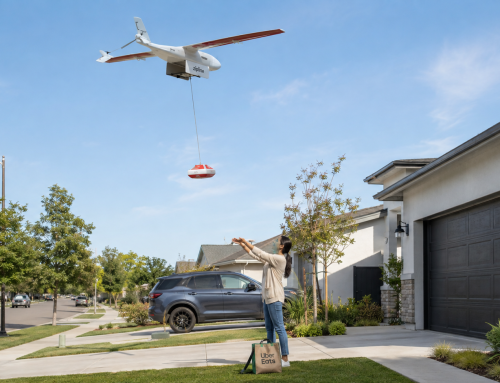
A customer places an eligible order through Grab. The restaurant prepares and packages the meal for transport, and the dispatch team transfers it into the drone-delivery workflow. SKYY then flies the aerial portion toward Nuanu, where a receiving procedure connects the arriving order with local delivery arrangements. Local accounts describe Grab driver-partners completing the final leg to the customer.
The important distinction is between the middle mile and the last mile. The middle mile links two operating points and can follow a recurring corridor. The last mile deals with individual homes, entrances, hotels and the messier details of locating a person. A drone can serve the first task without needing to land at each front door.
For you as a customer, the experience ought to remain straightforward: place an order, receive meaningful tracking information and get the food in acceptable condition. Behind that apparently simple sequence are order matching, payload checks, flight release, airspace coordination and proof of handover. An aircraft arriving quickly helps little if the food waits another twenty minutes for collection.
Why A Hybrid Model Makes Sense
Grab’s Bali Nusra operational head, Prisca Yosevine, said the company wants drone technology to complement its driver-partners. That is a useful starting point because the aerial and road networks have different strengths. Aircraft can cross particular bottlenecks without following the street pattern, and couriers can handle customer contact, changing addresses and practical delivery issues on the ground.
Think of a restaurant facing a busy road corridor at lunchtime. A scheduled airborne transfer could move several eligible orders to a receiving hub, after which nearby couriers complete short local trips. Whether that beats the existing system depends on the real flying distance, batching rules, dispatch timing, landing arrangements and the extra handling steps. The trial can test those assumptions using orders rather than laboratory scenarios.
There is also a labour question. Driver-partners remain central to the service design described by Grab. A mature rollout would still need clear responsibility for lost orders, delays, weather disruptions and customer complaints, along with sensible compensation for work performed at either end of the flight.
What BVLOS Means For This Trial
BVLOS stands for beyond visual line of sight. It describes operations in which the remote pilot cannot continuously see the aircraft unaided throughout the mission. That allows a route to extend beyond the short area a pilot can personally observe, opening opportunities for repeated journeys between separate sites.
However, losing direct visual contact changes the safety case. The operator must manage awareness of surrounding air traffic, maintain appropriate command-and-control links, deal with lost connectivity and plan what the aircraft will do when conditions change. You cannot substitute a live video feed for the entire operational risk assessment.
For routine delivery, BVLOS is significant because placing a separate pilot with visual contact along every stretch of a route would be expensive and difficult to scale. Approved remote operations can support a more centralised flight-management arrangement, subject to the limitations of the actual certificate and operating procedures.
Related: FAA Part 108 And BVLOS Drones Regulatory Update
Operating Near Ngurah Rai Airport Raises The Stakes
Ngurah Rai International Airport serves conventional air traffic, so nearby drone missions need special care. The partners say their route operates in controlled airspace associated with the airport. This does not establish that the aircraft fly across active runways, pass directly through airline approach paths or have unrestricted access to the airport’s airspace. The publicly available descriptions do not supply enough information to draw those conclusions.
Operators must account for the authorised operating area, permitted heights, air-traffic coordination, emergency contingencies and the possibility of other aircraft. A route can be technically short and still require detailed preparation because of the surrounding aviation activity.
Bali adds weather and communications challenges. A2Z’s announcement identifies strong winds, changing weather, populated areas and intermittent cellular connectivity as relevant operating conditions. That is why a successful fair-weather flight is only one piece of the evidence. Reliability during ordinary operating days matters much more than an impressive launch-day video.
What The Indonesian Approval Tells Us
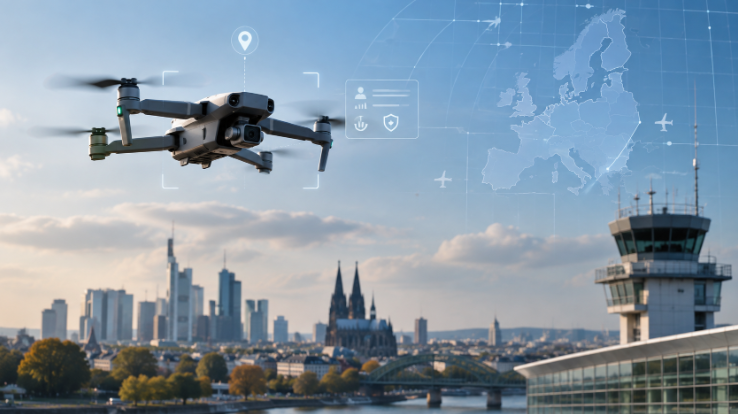
A2Z says the pilot is being conducted under a certificate issued by Indonesia’s Directorate General of Civil Aviation (DGCA) and that the authorisation used a Specific Operations Risk Assessment, or SORA, approach. SORA is a structured way to examine a particular drone operation, including potential harm on the ground and in the air, before identifying measures that reduce those risks.
That is different from a blanket announcement that BVLOS food delivery is now permitted everywhere in Indonesia. The public account describes a particular certified trial. Any operator planning another route would need to establish the approvals that apply to its own aircraft, route, altitude, airspace and ground environment.
Local coverage also points to involvement of transport authorities, Bali’s provincial administration and traditional village authorities, known as Desa Adat. Aviation approval alone cannot answer every local concern. Site access, community consultation, emergency coordination and the treatment of people beneath the route all contribute to whether an operation can proceed responsibly.
Safety Cases Need More Than A Certificate Number
The operator’s procedures matter on every flight. Before launch, the team needs suitable weather, a healthy aircraft, a valid route, an acceptable communications path and a clear plan for the destination. During the mission, it needs a practical way to identify abnormal performance and act before an inconvenience becomes an incident.
Ground risk deserves equal attention. Takeoff and landing areas must be managed to limit access by bystanders. Payload attachment must be checked so an order cannot detach unexpectedly. Local procedures should specify how personnel respond to an aborted landing, damaged packaging or an aircraft that returns to base with the meal still attached.
These are operational questions, not evidence that a specific failure has occurred in Bali. Public reporting at this early stage does not contain an incident log, a complete risk assessment or the pilot’s detailed operating limitations. Responsible coverage should leave those unknowns visible.
Meet The A2Z Longtail Dual
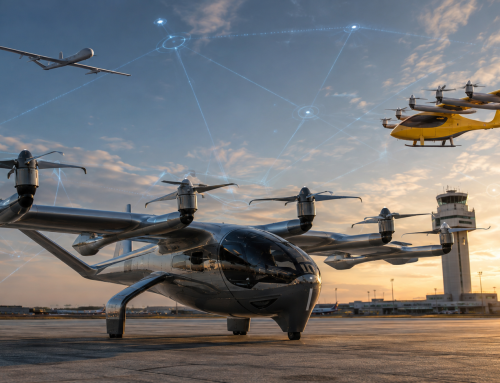
A2Z introduced the Longtail Dual on 31 August 2026, only weeks before the Bali trial. Its defining feature is a dual-battery design intended to preserve flight control after failure of one battery. That redundancy is particularly relevant over populated areas, where an abrupt power loss could have consequences well beyond a missed delivery.
The manufacturer also describes a six-rotor configuration that can tolerate a single propulsion failure, two cellular connections with automatic switching, real-time motor monitoring and battery health diagnostics. These features address different failure modes: a spare battery does not fix a lost data link, and a backup communications provider cannot repair a damaged motor. Fault tolerance comes from treating each risk separately.
A2Z lists IPX4 weather protection, onboard lighting, and optional parachute and ADS-B In equipment. Optional equipment should not be mistaken for confirmation that every aircraft in the Bali programme carries it. Public trial coverage identifies the aircraft model, though it does not provide a complete aircraft-by-aircraft equipment inventory.
Payload Capacity And The Six-Pound Figure
For the cargo version, A2Z advertises a winch capable of carrying up to 11 pounds, or approximately 5 kilograms. In a configuration that includes an optional parachute and stays within a common 55-pound maximum takeoff-weight category, the manufacturer cites a payload limit of 5.84 pounds, about 2.65 kilograms. These are configuration-dependent figures from the aircraft maker; they are not a measured payload result from Bali.
The company also claims roughly 85% of drone-delivery missions carry less than six pounds. That is a manufacturer-supplied market estimate, not a statistic independently established for Grab’s Bali orders. It does help explain the design choice: sacrificing some payload capacity for redundancy can be reasonable when the typical order is comparatively light.
Food has its own constraints. Containers must protect meals from spills, maintain suitable temperatures and fit within the aircraft’s weight-and-balance limits. A substantial family order, several drinks or an unusually bulky package may be unsuitable even when the gross weight appears manageable.
Why The AirDock Is As Important As The Aircraft
Aircraft get most of the attention in drone-delivery talk. The dock is where recurring operations either become practical or develop expensive delays. A2Z’s AirDock supports automated recovery and charging, reducing the need for a technician to remove a battery after every flight. CloudOS provides the mission-management layer, including route planning and fleet monitoring.
A2Z advertises a one-to-one flight-time-to-charge-time ratio for the Longtail Dual on the appropriate dock system. In simple terms, a 20-minute flight could be followed by roughly 20 minutes of charging under suitable conditions. That is a technology specification, not a published measurement of the Bali route’s duration or turnaround times.
Charging is only part of the cycle. Landing clearance, unloading, loading, preflight checks and release into an available airspace slot all take time. If ten orders arrive together and one aircraft can carry just one suitable load per mission, queue management quickly becomes the bigger problem. The number of docks, aircraft and trained supervisors will shape usable capacity far more than the advertised top speed alone.
The Economics Of Repeat Flights
Commercial viability ultimately depends on the cost of delivering each successful order. For a drone fleet, that includes aircraft depreciation, batteries, electricity, docking sites, maintenance, remote supervision, insurance, permissions, communications and customer-service exceptions. You also have to account for couriers and staff involved in handover.
Automating battery charging can remove a repetitive task and allow operators to oversee more flights from fewer locations. Still, the economics change with utilisation. A dock handling steady demand across a day can spread its fixed costs across more missions than one used only for occasional lunchtime orders.
The Bali partners have not published a verified cost-per-delivery comparison against motorcycles, nor public figures for staffing ratios or fleet utilisation. Claims that drones are already cheaper or faster on this route would therefore be premature. The trial is an opportunity to calculate those numbers using an actual service.
Can Drones Beat Bali Traffic?
Congestion is an obvious reason to test aerial delivery. A drone follows an authorised flight corridor rather than a sequence of junctions, one-way streets and traffic delays. That can make the travel portion more predictable on some routes. But road distance, flight distance and total customer wait are three separate measurements.
A proper comparison begins when the customer submits an order and ends when the meal is handed over. Record food-preparation time, queue time at dispatch, loading, takeoff, flight, recovery, transfer to a driver and the final journey. Then compare those intervals with ordinary ground delivery during busy periods and quieter hours.
You should also ask about delivery quality. Did the meal arrive at the right temperature? Was the packaging intact? Did the customer have to change where they collected it? A two-minute saving has limited value if the customer receives a spilled drink or has to walk to a collection hub they never requested.
Weather complicates the comparison. If aircraft are grounded during heavy rain or high winds, the existing road network must take the orders. Hybrid operations may be especially useful here because the same app can keep arranging ground deliveries when the air service is unavailable.
Bali Provides A Demanding Real-World Test
Bali brings a combination of tourism, established delivery activity, coastal weather and mixed development patterns. A resort, a hospitality venue and a planned creative district may have very different requirements from suburban homes or city apartment buildings. Operators can use this environment to study the realities of staff training, site access and order collection rather than treating the route as a pure aviation exercise.
Nuanu’s 44-hectare footprint gives the receiving team room to test how deliveries enter a site with multiple destinations and visitors. The project should help reveal whether a central receiving point creates convenience or an extra transfer that customers dislike. The answer can change depending on the type of order and the location of the final customer.
The project also presents an opportunity to discuss drones with residents and local communities. Noise, visual intrusion, personal privacy and the use of shared space need clear explanations. Good community relationships are developed through reliable operations and responsive communication, rather than an assumption that new technology will win everyone over automatically.
What The Trial Could Teach The Wider Drone Industry
The most transferable lesson may be the value of a narrow, repeatable route. One known restaurant hub and one known destination make it easier to collect comparable data. Engineers can see patterns in aircraft performance; logistics teams can compare handover times; regulators can examine a clearly defined airspace operation.
From there, the next question is how much of the system can be repeated at a second site. Would the same dock design fit? Would the airspace authorisation require substantial changes? Would the operating team need more staff? The challenge of expansion is not solved by buying several more airframes.
A2Z and SKYY have discussed the possibility of shared dock infrastructure supporting emergency response, offshore logistics, ship-to-shore cargo and inspections. Those are proposed future applications of the platform, rather than services verified as operating within this Bali food-delivery pilot. Their attraction is clear: multiple customers might share permanent charging infrastructure, increasing use across different times of day.
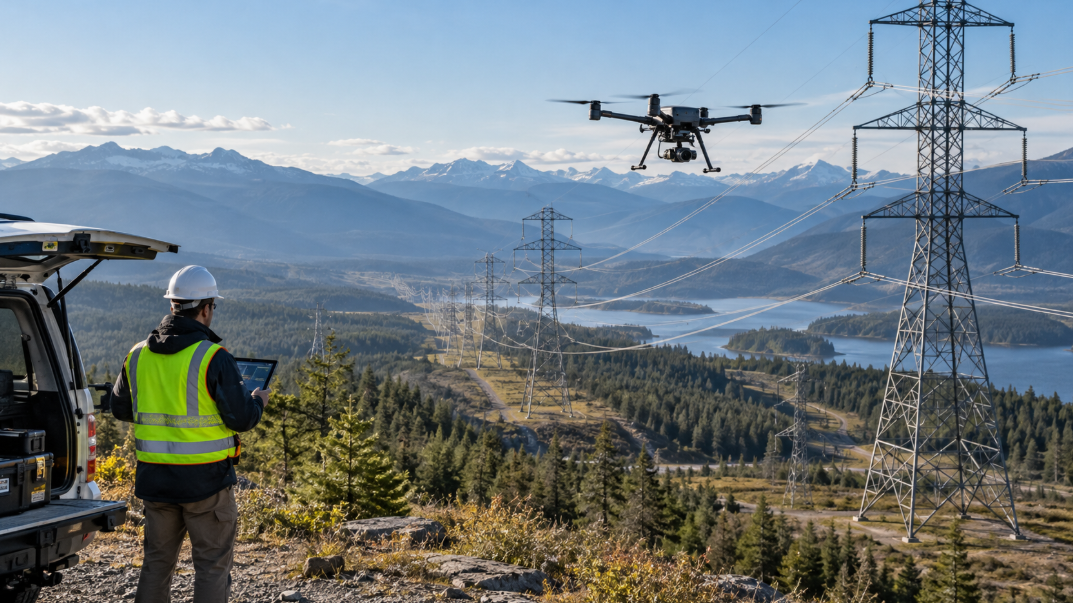
For inspection companies, that is an especially interesting idea. A dock network built for scheduled logistics might also support routine industrial surveys, provided payloads, operational approvals and safety procedures are appropriate. The investment case then becomes broader than one food route.
Five Measures Worth Watching Before Expansion
First, measure successful deliveries against attempted missions. A system that flies reliably in demonstrations needs to show the same performance during busy operating hours.
Second, capture actual end-to-end order times, including both aerial and ground handovers.
Third, record cancellations and diversions, identifying weather, technical and operational causes separately.
Fourth, track cost per completed delivery at realistic fleet utilisation. A lower flight cost is not enough if extra packaging, staff or transfers absorb the savings.
Finally, ask customers and driver-partners whether the service is genuinely useful. A sustainable operation needs predictable performance and acceptance from the people working with it.
None of these five measures currently has a comprehensive, publicly verified result for the Bali pilot in the sources reviewed through 14 October 2026. That makes them sensible questions for follow-up reporting when the planned three-month trial concludes.
What Happens After The Three-Month Trial?
A trial launched on 5 October for three months would ordinarily reach its planned endpoint in early January 2027, subject to any revised timetable. The partners can then review flight performance, operational incidents, customer feedback, staff needs and commercial costs. They may adjust the route, continue testing, extend the network or decide particular services are better left to ground couriers.
For a wider rollout, repeatable approvals and standardised operating procedures will matter alongside aircraft performance. Each additional corridor could introduce different aircraft traffic, populations, terrain, communications coverage and emergency landing options. A safe case for one route is an important starting point; expansion calls for fresh evidence.
For now, the significant achievement is that Grab, SKYY and A2Z have assembled an operational test involving actual food orders, a major consumer platform, automated dock infrastructure and a regulated BVLOS flight corridor. Whether it becomes an enduring delivery service will be determined by months of ordinary work rather than one successful launch.
Frequently Asked Questions
Has Drone Food Delivery Started In Bali?
Yes, a limited BVLOS food-delivery pilot began on 5 October 2026. It connects Café del Mar Bali and Nuanu Creative City using flights operated by SKYY Network, with ordering supported through Grab. It is a controlled trial, not an island-wide launch.
How Long Will The Bali Drone Delivery Trial Run?
The announced trial period is three months. Based on its reported 5 October 2026 launch, that points to an early-January 2027 conclusion if the schedule remains unchanged. The organisers could alter the timetable, and a later announcement would be needed to confirm an extension.
Does Grab Operate The Drones Itself?
No, SKYY Network is the flight operator identified for the Bali project. Grab contributes its ordering and delivery network, and A2Z Drone Delivery provides the aircraft and charging infrastructure. The partners have separate responsibilities across the service.
Are The Drones Flying Near Bali International Airport?
Yes, the partners state that the route operates in controlled airspace associated with Ngurah Rai International Airport. The flights are described as being conducted under a DGCA-issued certificate. Public reporting does not disclose the complete route geometry or permit unrestricted airport access.
How Much Food Can The A2Z Longtail Dual Carry?
The manufacturer advertises a cargo winch capacity of up to 5 kilograms, with lower usable limits for particular aircraft configurations. A2Z cites approximately 2.65 kilograms in a configuration incorporating an optional parachute within a specified takeoff-weight category. The Bali programme has not published a verified average food-order payload.
Will Drone Delivery Replace Grab Drivers?
No replacement of driver-partners is planned in the model described publicly by Grab Indonesia. The intention is to combine drone transport on a suitable middle-mile segment with couriers completing the final delivery. The exact staffing and delivery arrangements could develop as the trial progresses.
Is BVLOS Food Delivery Now Legal Everywhere In Indonesia?
No, the Bali trial’s reported authorisation does not establish nationwide approval for every BVLOS delivery route. Operators need to consider the permissions and risk controls that apply to their particular missions. This pilot demonstrates one certified use case under its stated arrangements.
Is Drone Delivery Already Faster And Cheaper In Bali?
There is no independently verified comparison establishing that conclusion for this trial as of October 2026. The partners are testing the operational model, and metrics such as delivery duration, completed orders, utilisation and cost per order will be needed to make that assessment.