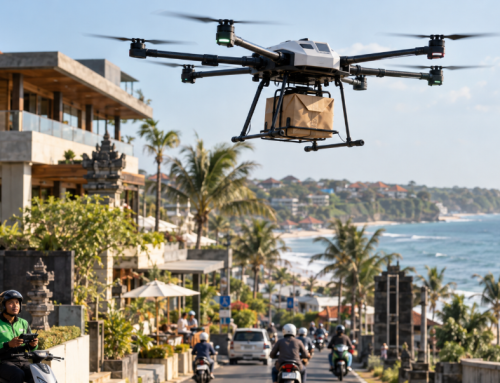
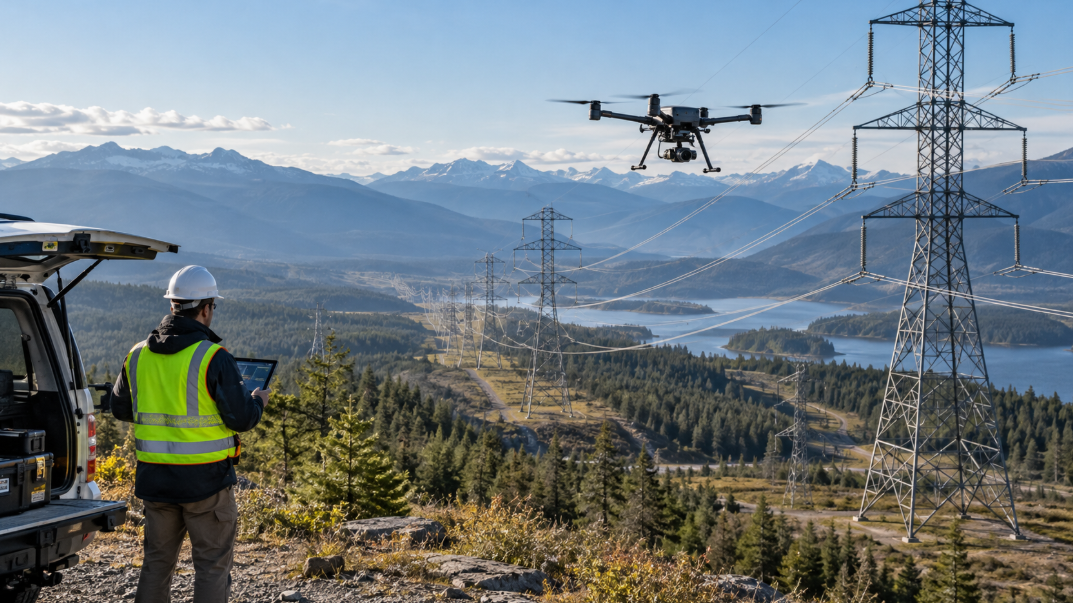
A utility company wants to inspect 80 miles of power lines. The drone has the range, the cameras are ready, and the route is already mapped. Yet under the usual U.S. small-drone rules, the remote pilot generally must keep the aircraft within visual line of sight. That creates a problem: the aircraft can cover the distance, but the operating approval may not.
The Federal Aviation Administration (FAA) is working toward a broader answer. Its proposed Part 108 would create a standard framework for certain beyond visual line of sight (BVLOS) flights, allowing qualifying operators to move away from relying on individual waivers for every new type of operation. For infrastructure owners, inspection companies and drone pilots, the opportunity is substantial. So are the safety and operational responsibilities.
As of today, Part 108 is not a final, effective regulation. The final-rule submission was received on 10 July 2026 and still under review. The requirements discussed below describe the published proposal, not permissions you can exercise today.
What Is Part 108 And Why Is The FAA Proposing It?
Part 108 is the FAA’s proposed set of rules for routine, low-altitude BVLOS drone flights and some services that support them. BVLOS simply means the aircraft flies beyond the distance at which the pilot or an appropriate visual observer can maintain the required direct view. A camera feed, GPS position or moving-map display does not substitute for that visual contact under the ordinary visual-line-of-sight requirement.
Under 14 CFR Part 107, most commercial small-drone flights require visual line of sight unless an applicable waiver or other authorization permits otherwise. The FAA has granted such waivers for particular operations, and other drone activities have used exemptions and additional aviation approvals. That route has supported innovation, but reviewing an operation individually takes time and makes repeatable nationwide expansion more difficult.
The Part 108 notice of proposed rulemaking, published on 7 August 2025, set out a more predictable route for activities such as aerial surveying, package delivery, agriculture, training and public-interest missions. Congress had already directed the FAA to develop BVLOS regulations through the FAA Reauthorization Act of 2024. The challenge is to increase the number of useful flights without treating low-altitude airspace as empty.
Where The Rule Stands In October 2026
The Timeline So Far
The Road To Routine BVLOS Operations
From the original proposal to federal review, here is where the United States stands on routine Beyond Visual Line of Sight operations.
The FAA and Transportation Security Administration released their joint proposal on 7 August 2025. The initial comment period closed on 6 October 2025. In January 2026, the FAA reopened a narrower discussion focused on electronic conspicuity and aircraft right-of-way, before declining a request to extend that reopened period in February. The agency said it had received approximately 3,100 comments during the original consultation.
The public Unified Agenda entry anticipated a final rule in July 2026. On 10 July, the package reached the Office of Information and Regulatory Affairs (OIRA) for review. As of this article’s publication date, its status remains Pending Review. The final text has not been published, and the July target should not be mistaken for an effective date.
What Could Change Before Publication?
Comments raised questions about how drones should detect other aircraft, who should yield and how aircraft could communicate their presence. Those details affect helicopter crews, agricultural aircraft, emergency responders and low-level general aviation. The final regulation may therefore differ from the 2025 draft. An operator budgeting for equipment today should distinguish the proposed requirements from confirmed obligations, then review the final Federal Register text when it appears.
How Part 108 Could Work In Practice
Permissions And Operator Oversight
The proposal describes permission and certification pathways tied to the kind and scale of operation. Some activities would follow a permit-based approach; more complex or higher-risk activities would face stronger certification requirements. The approach is intended to match regulatory scrutiny with exposure and operational complexity. For example, a localized inspection route and a large delivery network present different staffing, aircraft-management and ground-risk challenges.
Expect documentation to play a larger role in BVLOS planning. An applicant would need a defined operating area, procedures for abnormal events, aircraft and systems suitable for the mission, and accountable personnel. Approval to fly BVLOS would not remove other airspace restrictions or site-specific coordination requirements. Airports, restricted areas and temporary flight restrictions still need to be addressed through the applicable rules.
Aircraft, People And Service Providers
The FAA proposes requirements covering aircraft acceptance, maintenance, remote crew qualifications and supporting third-party services. That last category is especially interesting. A future operator may rely on approved services for traffic coordination or related information rather than developing every capability internally. This could lower the technical burden for some businesses, although service fees, connectivity needs and vendor responsibilities would become part of the operating budget.
For pilots, the work changes when a drone is a distant aircraft represented by telemetry rather than a visible object in the sky. You need to interpret system alerts, understand lost-link behaviour and know exactly who can command a return, diversion or landing. Flight hours alone are a poor substitute for practising those decisions.
Detect-And-Avoid Is Central To The Debate
A BVLOS aircraft must deal with traffic that the remote pilot cannot see directly. The proposal addresses this through detect-and-avoid (DAA), strategic separation and operating rules. DAA may draw on sensors, surveillance information and other systems to identify conflicts and initiate an appropriate response. Its effectiveness depends on what it can actually detect, how quickly information arrives and whether the drone has room to manoeuvre.
The toughest cases often involve aircraft that are not broadcasting their position. A helicopter on a medical flight or an aircraft conducting low-level work may enter the same general region as a drone. Electronics can help, but performance needs to be assessed against the actual traffic and terrain, including the possibility of blocked signals and delayed information.
The 2025 proposal also included controversial right-of-way concepts, particularly for shielded operations near obstacles and infrastructure. The FAA sought more comment on those concepts in 2026. You should not plan around a proposed right-of-way priority as though it were established law.
Why Infrastructure Inspection Could Benefit
Power Lines And Utility Corridors
Transmission lines run across fields, hills, forests and roads. Under a conventional visual-line-of-sight plan, an inspection provider may need repeated launches, extra observers or frequent crew relocation. A permitted BVLOS route could connect longer segments and reduce some of that logistical work. More consistent flight paths could also improve comparisons of tower hardware, conductors, vegetation encroachment and thermal anomalies across inspection cycles.
Still, the flight plan needs to account for the very structures being inspected. Power lines, pylons and surrounding terrain can disrupt sightlines, signals and emergency landing options. The useful question is not simply how many kilometres the battery can cover. It is how much of the corridor can be inspected safely, legally and with imagery good enough for engineering decisions.
Wind Farms, Pipelines And Solar Sites
Wind farms combine widely spaced turbines, moving blades, changing weather and restricted working areas. BVLOS could help operators move between assets or carry out site-level surveys with fewer crew moves, depending on the approved operating concept. Close-up blade work still requires carefully controlled flight geometry, suitable cameras and site safety procedures. A long-range authorization alone does not deliver the resolution needed to assess a crack or leading-edge erosion.
Pipelines present another clear use case: operators may want to check remote rights-of-way for erosion, third-party activity or access problems. Large solar facilities could use recurring thermal surveys to identify panels that deserve closer examination. In all three cases, comparable, location-referenced data across inspection rounds may create more value than simply flying farther.
The Numbers Behind The Push For BVLOS
The FAA’s latest FY 2026–2046 aerospace forecast shows how large the drone workforce has become. By December 2025, more than 493,000 remote pilot certifications had been issued, an increase of more than 70,000 from December 2024. The forecast says 78% of certificate holders had Part 107 qualifications only, while 22% also held a Part 61 pilot certificate. More than 90% of exam takers passed and obtained remote pilot certification.
The U.S. Government Accountability Office also reported in February 2026 that the FAA’s 2025 forecasts projected the commercial fleet to exceed 1 million aircraft by the end of 2025 and reach 1.18 million by 2029. Its cited recreational-aircraft outlook rose from 1.87 million to 1.93 million over the same period. These are forecasts, not a live count of aircraft actively flying on any particular day.
That distinction is important for business planning. Registrations and certifications show market scale; they do not tell you how many drones can perform long-distance inspections safely today. The FAA’s policy problem is how to turn a growing inventory of aircraft and qualified people into repeatable operations that coexist with other airspace users.
What BVLOS Means For Your Costs And Client Promises
Longer flights can reduce time spent shifting a crew between launch locations. They might also make scheduled inspections practical for isolated assets that are expensive to reach. However, savings vary with geography, payload, communications, airspace complexity and weather. Operators may face new spending on DAA, maintenance, monitoring software, insurance, training and third-party airspace services.
For example, a 60-mile corridor is not automatically one continuous mission. Battery endurance, required reserve energy, wind, image overlap, safe landing sites and communications coverage may still force the job into segments. A quote that promises a single flight without checking those factors is asking for trouble.
Clients should also ask what happens after landing. Does the provider identify each defect and assign it to an asset location? Can a maintenance team compare the current findings with the previous survey? Are image quality and confidence levels recorded? The strongest commercial case links improved flight efficiency to reliable inspection outputs, rather than quoting aircraft range as the main benefit.
How To Prepare Before The Final Rule Arrives
Build An Operational Safety Case
Begin with a realistic mission profile: the route, altitude, population exposure, nearby airports, expected traffic, terrain, emergency landing options and normal weather conditions. Then record how the team would respond to a lost command link, degraded navigation, unexpected aircraft or a payload fault. Run tabletop scenarios with the remote pilot and the person responsible for site operations. A workable contingency plan should describe who acts, what the aircraft does and when the mission ends.
Test Data Links And Inspection Quality
A telemetry connection that works at the launch site may fail behind a ridge or steel structure. Measure coverage along the proposed route, document dead zones and establish safe responses. Separately, test whether the planned altitude and speed produce usable optical or thermal data. Low-quality imagery collected over a longer distance is still low-quality imagery.
Train For The Mission You Actually Intend To Fly
Training should cover airspace and BVLOS concepts alongside mission planning, crew coordination, communications failures, DAA alerts and inspection-specific decisions. If your work involves power lines, railways, pipelines or other distributed assets, ABJ Academy’s BVLOS Operations for Infrastructure Inspection course offers a relevant way to develop that operational understanding. Course study supports preparation; it is not itself FAA authorization to conduct BVLOS flights.
Finally, keep watching the rulemaking record. Review the final wording, its effective date, application process and transition arrangements before changing standard operating procedures or making claims to customers. Existing Part 107 obligations and applicable waivers continue to govern relevant flights until the legal framework changes.
The Bigger Question Is Operational Readiness
Part 108 could make U.S. drone work much more repeatable. A utility inspection company might eventually schedule corridors as routinely as it schedules ground crews. A solar operator could commission consistent surveys across a portfolio. A delivery network could expand without inventing a new authorization strategy at each location.
The best-prepared businesses will arrive with tested aircraft, trained personnel, reliable data workflows and clear procedures for failures. If the final text changes, those investments remain useful. Regulatory permission is one part of a professional drone operation; demonstrating that the aircraft, crew and inspection product work together is the larger task.
Frequently Asked Questions
Is FAA Part 108 Already In Effect?
No, Part 108 is not in effect as of 14 October 2026. The final-rule package remains under federal review, so the published 2025 proposal is not currently a general authorization for BVLOS flight. Check the official rulemaking record for a final publication and effective date.
Can I Fly A Commercial Drone BVLOS Under Part 107 Today?
Yes, if you have an applicable FAA waiver or other valid authorization covering that specific operation. Ordinary Part 107 flights otherwise remain subject to visual-line-of-sight requirements. Review your waiver’s conditions before making changes to aircraft, route, crew or operational scope.
Will Part 108 Allow One Pilot To Operate Several Drones?
Potentially, for qualifying operations under the final requirements. The proposal considers operational models involving greater scale, but staffing limits and oversight depend on the operation and the eventual text. Do not assume a blanket one-to-many permission.
Will Every Drone Need New Equipment?
No universal equipment list can be confirmed until the final rule is published. Aircraft and supporting systems will need to meet the applicable acceptance and operating standards, and a particular BVLOS mission may require new detection, communications or monitoring capabilities.
Does BVLOS Permission Automatically Cover Power-Line Or Wind-Turbine Inspection?
No, the approval must cover the intended aircraft, operating area and mission conditions. You must also account for other aviation rules, landowner arrangements, site hazards and the data-quality demands of the inspection itself.
When Will The Final FAA Part 108 Rule Be Published?
No confirmed publication date is available yet. The proposal reached federal review on 10 July 2026 after the FAA had previously targeted July for completion. Publication, any subsequent effective date and detailed compliance dates must be confirmed from the final rule.