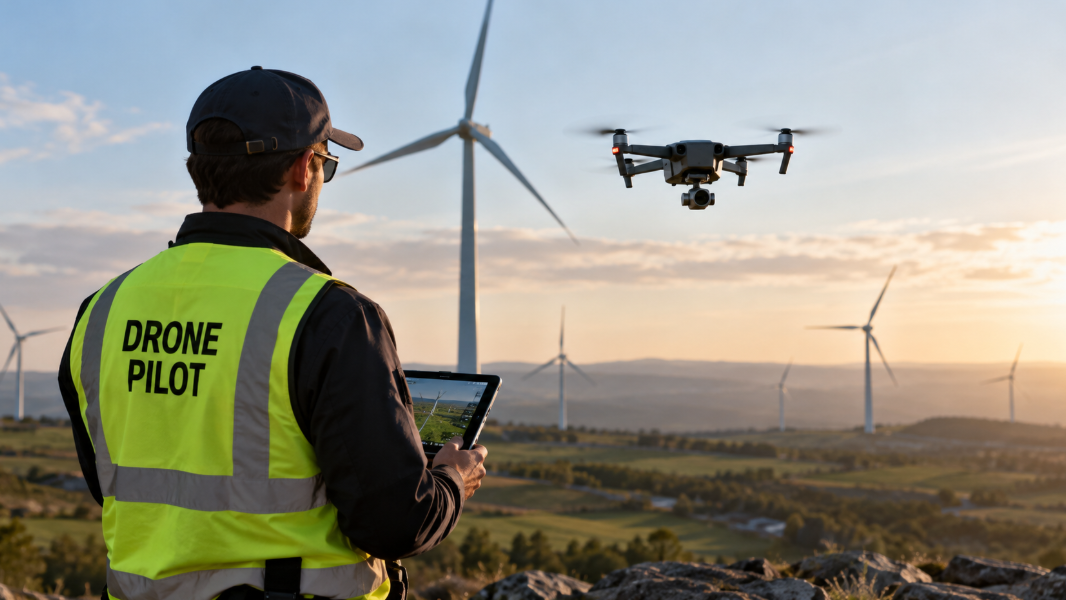
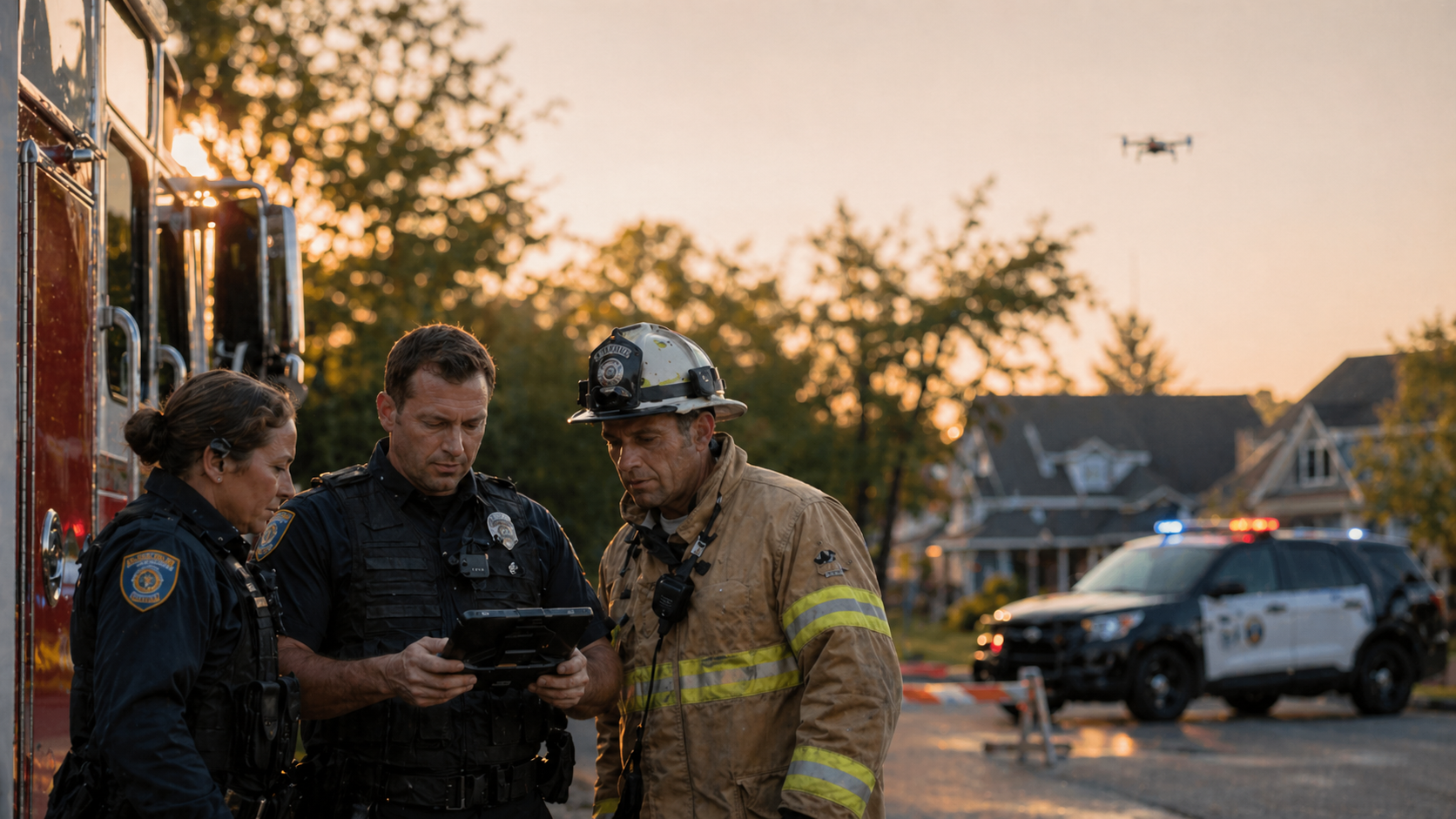
Public safety teams need drones that can respond quickly, protect sensitive data, and fit strict procurement rules, and the ACSL SOTEN is one of the secure small-drone platforms built for that exact pressure point.
Police departments, fire crews, emergency managers, search-and-rescue teams, disaster response units, and infrastructure protection agencies are all being asked to do more with tighter budgets, fewer people, and greater public scrutiny. A drone can help, but not every drone is suitable for public safety work. You are not only choosing a flying camera. You are choosing a data collection system, an evidence tool, a situational awareness platform, and, in some cases, a government procurement risk.
That’s what has piqued our interest in the ACSL SOTEN.
For public safety agencies in the U.S. and Europe, they don’t just look into range, camera quality, and flight time. Procurement teams now have to consider data security, country-of-origin rules, local privacy laws, public transparency, evidentiary standards, and community trust.
What Is The ACSL SOTEN?
The ACSL SOTEN is a small professional quadcopter designed for secure aerial work, including disaster response, inspection, and surveying.
This compact, foldable drone is made by ACSL, Japan’s largest drone manufacturer. It is positioned for disaster response, inspection, surveying, and missions where flight data, captured imagery, and communications need strong protection. Security measures are based on ISO15408 to help prevent data leakage, data extraction, and hijacking. It also supports encrypted communications, optional encryption for captured data, offline maps, LTE capability, and a one-touch swappable camera system.
Unlike hobby drones, SOTEN is built around field operations where the data may be sensitive. That could include a fire scene, a missing person search, a hazardous materials response, a bridge collapse, a public event, a traffic crash, a flood zone, or critical infrastructure.
ACSL markets the platform around four major strengths:
Secure Drone Technology
Agencies collect images that may show private homes, injured people, license plates, tactical perimeters, minors, damaged infrastructure, or evidence from a crime or crash scene. A weak drone data system can create privacy risks, public trust problems, and chain-of-custody concerns.
With SOTEN, you have a made-in-Japan secure drone platform. The ISO15408-based security measures reduce the risk of data leakage, extraction, and hijacking. Major aircraft parts are either made domestically or sourced from reliable overseas suppliers, while communications are encrypted and captured data can optionally be encrypted and managed in a Japanese cloud environment.
Swappable Camera Payloads
SOTEN’s one-touch swappable camera system allows teams to change payloads depending on the mission. ACSL lists camera options including a standard camera, EO/IR combination camera, multispectral camera, and optical zoom camera.
That makes SOTEN useful across different public safety departments. A fire crew may need thermal imaging. A police crash reconstruction team may need high-resolution stills. Emergency managers may need mapping imagery after floods. Environmental response teams may want multispectral data for vegetation, water, or contamination-related work.
Offline And Remote Area Operations
SOTEN can support offline maps, LTE communications, and internet-based control, including autonomous beyond-visual-line-of-sight operations in remote areas, depending on regulatory approval and operational setup.
That is useful for rural fire districts, mountain rescue teams, utility emergency response, and post-disaster work where normal connectivity may be weak or unavailable.
Field-Friendly Design
SOTEN is foldable and compact. ACSL positions it for wide-area portability, waterproof and dustproof missions, good wind resistance, intuitive operation, and disaster response.
A public safety drone has to be practical. If it is too heavy, too slow to launch, or too fragile, it may stay in the vehicle when the team needs it most.
Where ACSL SOTEN Fits In Public Safety
ACSL SOTEN is best suited for public safety teams that need secure aerial imaging, flexible payloads, and a smaller aircraft for rapid deployment.
It is not a heavy-lift drone. It is not a long-endurance fixed-wing aircraft. It is not meant to replace helicopters in major regional operations. Its strongest fit is the daily public safety mission where a compact drone can get above a scene quickly and give responders a safer view.
Suitability of ACSL SOTEN Drone for Public Safety
| Aspect | Specific ACSL SOTEN Spec | Public Safety Use | Suitability |
|---|---|---|---|
| Weight | 3.8 lb / about 1.7 kg with standard camera and battery | Portable for patrol cars, fire units, and field response kits | High |
| Max Takeoff Weight | 4.4 lb / about 2 kg | Supports compact professional payloads without becoming a heavy platform | Moderate |
| Flight Time | 25 minutes with standard camera at 18 mph airspeed | Good for quick scene checks, search grids, fire hotspots, and crash documentation | High |
| Speed | 15 m/s max airspeed, about 33 mph | Useful for reaching a nearby incident area quickly | High |
| Weather Rating | IP43 with camera, gimbal, and battery | Better suited for rain, dust, and disaster scenes than fair-weather drones | High |
| Standard Camera | 1-inch 20MP sensor, mechanical shutter, 4K video at 30 fps | Clear evidence photos, scene documentation, mapping, and inspection imagery | High |
| Thermal Option | Optional thermal and visible combo camera | Search and rescue, night response, fire hotspots, and heat-source checks | High |
| Other Payloads | Multispectral camera and optical zoom camera options | Useful for environmental checks, infrastructure review, and safer stand-off viewing | Mission-Based |
| Security | AES-256 encryption for wireless transmissions and flight logs | Protects sensitive public safety video, telemetry, and incident data | High |
| Recorded Data | Photo and video data can be encrypted on the SD card | Helpful for evidence handling, privacy protection, and secure records storage | High |
| Obstacle Avoidance | Vision sensors front, top, and bottom, plus infrared sensors top and bottom | Supports safer flight around buildings, trees, bridges, and emergency scenes | High |
| Remote ID | Bluetooth Remote ID | Supports U.S. drone identification compliance planning | High |
| Multi-Controller Use | Control transfer between up to 3 controllers with video and telemetry | Useful for command posts, handoffs, and team-based incident monitoring | High |
| Offline Maps | Ground control software can use offline maps | Helpful during rural, mountain, disaster, or weak-connectivity operations | High |
| LTE Module | Optional LTE communications module | Supports advanced remote operations where legally approved | Approval-Based |
Search And Rescue
In a missing person case, minutes matter. A SOTEN with an EO/IR payload can help search teams scan fields, wooded edges, riverbanks, ravines, industrial yards, or disaster zones. The thermal camera can help detect heat signatures, while the optical camera helps confirm what the operator is seeing.
However, thermal search is not automatic. Weather, terrain, tree cover, clothing, surface temperature, and time of day all affect results. The drone gives you a better view, but trained people still need to interpret the data and coordinate ground teams.
Fire Response
Fire crews can use SOTEN-style drones to check roof conditions, monitor hotspots, map a fire perimeter, view smoke movement, and assess access routes. Thermal payloads are particularly useful after flames appear controlled, because hidden heat can remain inside roofs, walls, debris piles, or vegetation.
The FAA recognises public safety drone operations as part of emergency response, and its public safety toolkit is designed to help law enforcement and public safety bodies operate drones within federal aviation rules. It also states that public safety drones must comply with Title 14 of the Code of Federal Regulations.
Disaster Damage Assessment
After floods, wildfires, storms, earthquakes, or industrial accidents, ground access may be unsafe. A drone can capture imagery of washed-out roads, damaged bridges, roof damage, blocked access points, powerline corridors, and isolated communities.
For emergency managers, the value is not just the image. It is the speed of assessment. A drone can help teams decide where to send crews first, which areas need evacuation support, and where infrastructure teams should focus.
Crash And Crime Scene Documentation
Drones can help document crash scenes, large outdoor crime scenes, and hazardous areas. High-resolution aerial imagery can reduce the amount of time roads remain closed. It can also help investigators build maps, measurements, and scene overviews.
This is where data governance becomes serious. If the imagery may become evidence, you need clear logs showing who flew, when the flight took place, where the files were stored, who accessed them, and how long they are retained.
Crowd Safety And Event Monitoring
For large gatherings, drones can support perimeter awareness, traffic management, crowd flow, medical response coordination, and emergency exits. Still, this is one of the most sensitive public safety uses because it can easily feel like surveillance.
Florida’s drone privacy statute gives a useful example of how states may draw boundaries. Florida generally bars law enforcement from using drones to gather evidence or information unless an exception applies, such as a warrant, imminent danger, missing person search, traffic management, crowd safety for gatherings of 50 or more people, disaster assessment, or certified fire department tasks. The law also requires policies covering storage, retention, release of images or video, and constitutional protections when drones are used for crowd safety.
>>> Stricter Florida Drone Laws Mean Jail, Fines, and $5,000 Penalties
Why SOTEN’s Security Position Matters For U.S. Agencies
For U.S. public safety teams, secure drone procurement is now a policy issue, not just a technical preference.
The American Security Drone Act, included in the FY2024 National Defense Authorization Act, restricts federal procurement and operation of unmanned aircraft systems manufactured or assembled by covered foreign entities. The Federal Register’s 2024 FAR rule describes the prohibition on procurement and operation of UAS manufactured or assembled by American Security Drone Act-covered foreign entities.
SAM.gov also notes that the American Security Drone Act requires publication of a list of “covered foreign entities” maintained by the Federal Acquisition Security Council.
For local agencies, the federal rule may matter when federal funds are involved. A police department, fire department, public works team, or emergency management agency using federal grant money may need to check whether a drone platform is acceptable under grant terms, procurement policies, state law, and local rules.
ACSL announced SOTEN’s U.S. pricing and dealer availability as an NDAA-compliant drone, describing it as a platform with swappable cameras and encryption processes suited to critical infrastructure work.The standard package goes for under under $10,000 USD.
That does not mean every agency can buy it without review. It means SOTEN is positioned for agencies that are already screening drones through security and supply-chain policies.
Blue UAS, Green UAS, And What They Mean For Public Safety
Public safety teams often hear terms like NDAA-compliant, Blue UAS, and Green UAS, but they are not the same thing.
NDAA-Compliant
NDAA compliance generally refers to whether a drone avoids restricted components, manufacturers, or countries under applicable U.S. defense and federal procurement laws. For public safety buyers, this is often the first procurement filter.
Blue UAS
The Blue UAS Cleared List was created to vet drones for government use. DIU’s Blue UAS page notes that, under a July 10, 2025 Secretary of War memo, the Blue UAS Cleared List is transitioning to the Defense Contract Management Agency.
If your agency is tied to defense, federal funding, critical infrastructure, or homeland security work, Blue UAS status can affect purchasing options.
Green UAS
Green UAS is a cybersecurity and supply-chain compliance certification for drones, components, and software manufacturers. It verifies that a system is built securely, uses trusted components, and follows cybersecurity best practices. Green UAS was created for the commercial and non-defense market and now serves as a pathway into the Blue UAS ecosystem through alignment with DIU.
U.S. Federal Rules That Affect ACSL SOTEN Public Safety Operations
A SOTEN public safety program in the U.S. must fit FAA rules before it fits agency policy.
14 CFR Part 107
Most small drone operations in the U.S. fall under 14 CFR Part 107, the FAA’s small UAS rule. Public safety agencies may operate under Part 107 when conducting civil aircraft operations. The FAA public safety toolkit directly references Part 107 and Part 91 pathways for public safety agencies.
Under Part 107, your agency needs certified remote pilots, aircraft registration, operating procedures, and compliance with airspace restrictions. For controlled airspace, you need FAA authorisation, usually through LAANC where available or through other FAA channels.
Part 91 Public Aircraft Operations And COAs
Some public agencies operate as public aircraft under Part 91 with a Certificate of Waiver or Authorization, often called a COA. The FAA toolkit helps agencies decide whether their operation should follow Part 107 or Part 91.
This is because emergency services sometimes need operations that do not fit normal Part 107 limits. Still, a public agency cannot simply declare that every drone flight is exempt from normal rules. It needs the right legal pathway.
>>> How to Get a Certificate of Authorization (COA) for Governmental Organizations
Remote ID Under 14 CFR Part 89
Remote ID is now central to U.S. drone compliance. All drone pilots who are required to register or have registered their drone must operate according to the Remote ID rule.
For public safety, Remote ID has two sides. It helps aviation safety and accountability, but agencies must also think through operational security. A public safety drone may be responding to a sensitive incident, yet the aircraft still has to comply with applicable Remote ID rules unless a legal exception applies.
Operations Over People And Night Operations
The Operations Over People rule became effective on April 21, 2021, and Part 107 pilots may fly at night, over people, and over moving vehicles without a waiver when they meet the rule’s requirements. Airspace authorisations are still required for night operations in controlled airspace under 400 feet.
This is important for public safety because many incidents happen at night, near roads, or around crowds. Your drone choice must match the category of operation. Your pilots also need training that covers night vision, lighting, crew coordination, and public safety risk assessment.
Part 107 Waivers
Part 107 waivers allow drone pilots to operate outside certain Part 107 limits if they demonstrate that the operation can still be conducted safely using alternative methods.
For SOTEN, waivers may matter for operations such as beyond visual line of sight, operations over people that do not fit a standard category, or more complex emergency response patterns.
State Laws That Affect Public Safety Drone Use
State drone laws can be stricter than federal aviation rules, especially on privacy, evidence gathering, and government surveillance.
The FAA controls U.S. airspace safety, but states often regulate privacy, police procedure, data retention, procurement, and public transparency. That means a SOTEN flight can be FAA-compliant and still violate state or local rules if the agency has not checked the full legal stack.
Florida
Florida Statute 934.50 is one of the clearest examples. It restricts law enforcement drone use for gathering evidence or information unless an exception applies. Exceptions include a search warrant, imminent danger, missing person searches, traffic management, crime scene or crash scene evidence collection, disaster assessment, and certified fire department tasks. It also restricts drone imaging of private property where a person has a reasonable expectation of privacy.
For a Florida agency, the aircraft is only one part of compliance. Policies must define when SOTEN can be launched, who can approve flights, how imagery is stored, and how privacy complaints are handled.
California
California’s AB 481 is another key example. Codified at Government Code section 7070 et seq., requires city council approval of a Military Equipment Use Policy before law enforcement agencies acquire, use, or seek funds for certain equipment. The same document states that annual reports and public posting are part of the process.
This can affect drones because some local policies classify police drones under military equipment or surveillance-related oversight rules. A California agency considering SOTEN may need public meetings, council approval, an annual report, a written policy, and a public-facing equipment list.
Local Ordinances And Agency Policies
Local ordinances may add further limits. A city may require public notice before drone purchases. A county may limit drones at parks or public events. A police department may have a retention schedule for drone footage. A fire department may have separate emergency-use rules.
Before buying SOTEN, your agency should check:
- FAA rules
- State drone laws
- State privacy law
- Public records law
- Procurement law
- Grant conditions
- Local council ordinances
- Agency drone policy
- Data retention policy
- Evidence handling rules
That may feel like a lot, but it protects the program. Public safety drone programs can lose public support quickly when people feel they were introduced quietly or used too broadly.
European Rules That Affect ACSL SOTEN Public Safety Work
In Europe, public safety drone work is shaped by EASA rules, national aviation authorities, GDPR, local police powers, and, increasingly, U-space.
EASA Drone Categories
The European drone framework is built around risk. Operations usually fall into the Open, Specific, or Certified category. SOTEN public safety missions will often fall into the Specific category if they involve higher-risk locations, urban operations, emergency scenes, operations near people, or complex flight profiles.
Europe has one set of EU drone rules, with operators authorised by Member State authorities.
For public safety teams, this means you need to check your national aviation authority’s operational authorisation process. A fire brigade in Germany, a police unit in France, and an emergency response team in Spain may all operate under the EU framework, but the national authority and local public safety laws still matter.
Regulation (EU) 2019/947 And Regulation (EU) 2019/945
Two core EU drone regulations matter most:
- Regulation (EU) 2019/947 covers rules and procedures for UAS operations.
- Regulation (EU) 2019/945 covers requirements for UAS products and third-country UAS operators.
Together, these shape how drones are classified, how operators are registered, what pilots must know, and when authorisation is required.
U-Space
U-space is Europe’s framework for managing drone traffic in designated airspace. The regulations entered into force in January 2021 and are meant to support safe sharing of airspace between crewed and uncrewed aircraft. In U-space airspace, drone operators must use mandatory services such as flight authorisation, geo-awareness, network identification, and traffic information.
For a public safety SOTEN program, U-space can affect flights in busy urban areas, near transport corridors, near airports, or inside designated drone traffic zones. Emergency services may have priority procedures in some jurisdictions, but they still need to understand the local U-space structure.
GDPR And Public Safety Drone Data
In Europe, drone imagery can be personal data if it identifies or can reasonably identify a person. That means GDPR can apply to drone footage of streets, homes, vehicles, faces, license plates, crowds, workplaces, and emergency scenes.
For SOTEN operators, the question is not only whether the aircraft can collect data securely. The question is whether your agency has a lawful basis for collection, clear retention rules, access controls, purpose limits, and processes for data subject rights where applicable.
AI Act Issues For Drone Video Analytics
If a public safety team connects drone footage to AI systems, the legal risk rises. The EU AI Act bans or restricts certain abusive AI practices, including social scoring and some biometric or predictive policing applications, with specific law enforcement safeguards and phased application dates.
Drone footage can be paired with facial recognition, vehicle recognition, crowd analytics, or behaviour prediction tools. SOTEN itself is a drone platform, but the software connected to its data can create AI Act and GDPR issues.
What Public Safety Teams Should Like About SOTEN
SOTEN’s strongest public safety value is the balance between portability, mission flexibility, and secure data handling.
It Is Small Enough For Rapid Deployment
A compact foldable drone is easier to carry in patrol vehicles, fire command units, rescue trucks, and emergency management kits. Public safety work often starts before a specialised aviation unit arrives. A portable aircraft helps trained responders get an aerial view early.
It Supports Different Mission Types
The swappable payload design means one aircraft can serve several departments. Police may need zoom and mapping. Fire may need thermal. Emergency management may need wide-area imagery. Environmental teams may need multispectral inspection.
This can help agencies avoid buying separate drones for every department, although they still need enough aircraft, batteries, chargers, pilots, and maintenance coverage for real operations.
It Fits Sensitive Data Environments
Encrypted communication and optional data encryption matter when a drone is used around critical infrastructure, crime scenes, disaster areas, or private property. ACSL’s ISO15408-based security positioning gives procurement teams a stronger starting point than a consumer drone with unclear data routing.
It Responds To Supply-Chain Pressure
The U.S. drone procurement climate has shifted sharply. Federal rules, state restrictions, and grant conditions increasingly push agencies toward vetted, trusted, NDAA-aligned platforms. ACSL’s U.S. positioning directly responds to that shift.
Where SOTEN May Not Be The Best Fit
SOTEN is useful, but is not automatically ideal for every public safety mission.
Long-Endurance Operations
If your agency needs hours of overwatch for a large wildfire, marathon, border area, or major disaster zone, a small quadcopter may not be enough. You may need tethered drones, fixed-wing aircraft, multiple battery teams, or crewed aviation support.
Heavy Payload Missions
SOTEN is designed for camera payloads, not heavy delivery. If your mission involves carrying large rescue equipment, radios, flotation devices, or special sensors, you need to check payload limits and safer alternatives.
Fully Automated Drone As First Responder Programs
Drone as First Responder programs often involve docking stations, automated launch workflows, BVLOS approvals, remote operations centres, and advanced detect-and-avoid processes. SOTEN may support some remote capabilities depending on configuration and approval, but agencies should not assume it is ready for every DFR model.
ACSL SOTEN Vs Consumer Drones For Public Safety
Consumer drones often win on price, availability, and ease of use. That is why many public safety teams adopted them early. However, agencies are now facing a different set of risks. A cheap drone can become expensive if it fails procurement review, loses grant eligibility, creates data security concerns, or triggers a privacy complaint.
SOTEN’s appeal is that it is built for organisations that need a stronger answer on security, supply chain, and data handling. It is also compact enough for daily public safety work and flexible enough to serve different missions through payload changes.
That said, agencies should still compare SOTEN against other vetted drones based on:
- Payload quality
- Thermal sensor resolution
- Flight time
- Weather rating
- Controller usability
- Training support
- Software ecosystem
- Evidence workflow
- Mapping compatibility
- Maintenance availability
- Battery cost
- Repair turnaround
- Compliance documentation
The best drone is not the one with the longest spec sheet. It is the one your team can fly legally, safely, transparently, and repeatedly.
FAQs About ACSL SOTEN Drones For Public Safety
Is ACSL SOTEN Good For Public Safety?
Yes, ACSL SOTEN is a good fit for many public safety missions because it combines secure communications, swappable payloads, compact portability, and field-ready imaging. It is especially useful for search and rescue, fire response, disaster assessment, crash documentation, infrastructure checks, and emergency scene awareness.
Is ACSL SOTEN NDAA-Compliant?
Yes, ACSL markets SOTEN in the U.S. as an NDAA-compliant drone. The company announced U.S. pricing and dealer availability for SOTEN as an NDAA-compliant platform with swappable cameras and encryption processes for sensitive missions. (ACSL Inc. is the US subsidiary of ACSL Ltd.)
Can Police Departments Use ACSL SOTEN?
Yes, police departments can use ACSL SOTEN if their flights comply with FAA rules, state law, local policy, and privacy requirements. Police agencies should be especially careful with warrants, private property imaging, crowd monitoring, evidence retention, and public transparency.
Can Fire Departments Use ACSL SOTEN?
Yes, fire departments can use ACSL SOTEN for fireground awareness, hotspot checks, roof assessment, disaster damage review, and search support. Thermal payloads are particularly useful, but pilots still need training because heat signatures can be affected by weather, smoke, building materials, and terrain.
Does ACSL SOTEN Have A Thermal Camera?
Yes, ACSL SOTEN supports thermal imaging through compatible payload options. ACSL lists an EO/IR combination camera among SOTEN’s swappable camera choices, and newer SOTEN thermal payload developments have been announced for U.S. market needs.
Can ACSL SOTEN Be Used For Drone As First Responder Programs?
Yes, ACSL SOTEN may support some rapid response workflows, but a full Drone as First Responder program needs more than the aircraft. Your agency also needs FAA or national authority approval, pilot staffing, remote operations procedures, data policy, launch sites, communications, and public oversight.
Is SOTEN Better Than DJI For Public Safety?
SOTEN may be better for agencies that prioritise secure procurement, NDAA alignment, encrypted communications, and non-China supply-chain positioning. DJI drones may still offer strong imaging and mature software, but many U.S. public agencies face procurement restrictions or policy pressure around Chinese-made drones.
Does ACSL SOTEN Help With Privacy Compliance?
Yes, SOTEN’s encrypted communication and optional data encryption can support privacy compliance, but the drone cannot make an agency compliant by itself. Privacy compliance depends on lawful use, written policy, retention limits, access controls, redaction, public records handling, and strong pilot training.
Can SOTEN Fly Over People?
Yes, SOTEN may be flown over people only when the operation meets the applicable legal requirements. In the U.S., Part 107 operations over people must meet FAA category rules, aircraft requirements, and operational limits. In Europe, flights near or over people depend on the operating category, drone class, risk assessment, and national authorisation.