Drones flying above our neighborhoods have become a familiar sight. With hundreds of thousands of drones in circulation, it’s only natural to wonder if you can legally fly a drone over someone else’s private property? Under federal airspace rules you generally can, but it’s not ‘open season’ for all. There are important nuances involving airspace rights and local regulations that every drone pilot should know before taking off over a neighbor’s yard or a stranger’s land. Regulations that come with fines and jail time, like if you are determined to have invaded another’s privacy.
In this guide, we’ll break down the rules, compare U.S. and European approaches, and share tips to stay on the right side of the law (and your neighbors!).
Airspace Rights vs. Private Property
Who owns the sky above your home?
Many people assume that they own the airspace over their property outright – after all, an old Latin saying claimed land ownership extended “up to the heavens.” However, modern law doesn’t work that way. Airspace is regulated by government authorities for the common good, which means you don’t have unlimited control of the air above your land.
In the United States, the Federal Aviation Administration (FAA) asserts jurisdiction over all navigable airspace, even the air directly above private property. This means the air above your backyard is, legally speaking, part of the national airspace that the FAA controls. In practice, drone pilots are allowed to fly over private land as long as they obey FAA safety rules.
Property owners cannot simply veto flights that pass over their homes at a reasonable height.
The U.S. Supreme Court established that landowners hold rights only to the “immediate reaches” of airspace needed for the use and enjoyment of their property. Anything above that is public domain for aircraft. Similarly in the UK, the law says no trespass claim exists for aircraft (including drones) flying at a “reasonable height” over property. So if your drone is high above the rooftops, merely transiting, it’s generally not trespassing under these principles.
However, how low is too low? The grey area lies in low-altitude flights.
If a drone is hovering just above someone’s lawn or windows, it can cross into the property owner’s private sphere. Courts have hinted that a drone skimming a few meters above a backyard could count as trespass or nuisance, because it interferes with the owner’s ordinary use of their land. In one UK case, even an object protruding just 8 inches into someone’s airspace was deemed trespass. By extension, a drone that repeatedly swoops through a fenced yard or peeks into a window is likely violating the owner’s property rights and privacy. The lower and more intrusive the flight, the greater the chance it’s illegal – even if the FAA itself doesn’t set a specific low-altitude rule for drones.
So you may fly over private property in general, but you cannot intrude in the immediate, low-altitude space where someone has a reasonable expectation of privacy and control. What counts as “reasonable” height isn’t rigidly defined, but staying well above tree/roof level is wise. If you wouldn’t want a stranger’s drone lingering 20 feet above your yard, it’s safe to assume your neighbors feel the same way.
FAA Rules for Flying Over Private Property (U.S.)
In the U.S., the FAA is the ultimate authority in the sky. All drones – whether for fun or commercial work – must follow FAA regulations. Importantly, FAA rules do not explicitly prohibit flying over private property. The FAA cares mainly about airspace safety (keeping drones away from airports, manned aircraft, etc.) and general operating rules. So as far as federal law is concerned, you are allowed to fly over someone’s land if you adhere to the standard drone regulations.
Here are some key FAA rules that apply to all drone flights over land (private or public):
- Stay below 400 feet altitude in uncontrolled airspace. (Drones aren’t allowed to go higher in most cases, and manned aircraft generally stay above 500 feet except during takeoff/landing.)
- Keep your drone within visual line of sight. You (or an observer helping you) must always be able to see the drone with your own eyes.
- Avoid restricted areas and no-fly zones. Steer clear of airports without permission, and don’t fly near sensitive sites like military bases, critical infrastructure, or temporary flight restrictions (for example, around wildfires or large public events).
- Register your drone if it weighs more than 0.55 lbs (250 grams). Most consumer drones meet this threshold, so make sure you’ve registered it with the FAA and marked your registration number on it.
- Don’t fly recklessly or endanger people. FAA rules prohibit careless or reckless operations. This includes not flying directly over unprotected people on the ground who aren’t part of your operation (though the FAA’s “no flying over people” rule has some exceptions and waivers in Part 107).
The FAA also differentiates recreational vs. commercial drone use. If you’re flying just for fun under the model aircraft rules (United States Code Section 44809), you must follow the safety guidelines of an FAA-recognized Community Based Organization and pass a basic knowledge test (the TRUST test).
But note: whether you’re a hobbyist or a licensed commercial pilot, the rules about flying over private property remain the same under FAA law. The FAA does not give property owners special veto power over flights; it focuses on the flight conduct (safe altitude, not endangering others, etc.), not whose land is underneath.
So purely from the FAA’s perspective, can you fly over that nice house down the street? Yes – legally you can, provided you follow the rules above. There is no blanket FAA rule requiring you to get the homeowner’s permission or forbidding flights over private land.
However, just because the FAA permits it doesn’t mean you’re completely in the clear. This is where privacy laws, state regulations, and common courtesy come into play, as we’ll explore next. Low-altitude flights especially can raise red flags even if they’re technically allowed by the FAA. Always remember: legal under FAA rules doesn’t automatically equal welcome or lawful in all contexts.
State and Local Drone Laws (U.S.)
While the FAA controls the airspace, state and local governments can regulate aspects of drone use that touch on privacy, harassment, land use, and law enforcement. Over the past decade, almost every U.S. state has enacted some form of drone law. These laws create a patchwork of rules on things like aerial trespass, voyeurism, and surveillance. It’s crucial to know your local laws because what’s perfectly fine in one state might get you fined or even arrested in another.
Broadly, state drone laws fall into two categories:
-
Privacy-focused laws
These prohibit using drones to spy on or capture images of people in places where they expect privacy (e.g. their home, backyard) without consent. For example, California law (Civil Code §1708.8, amended by AB 856) makes it illegal to use a drone to take photos/video of someone on their private property if they have a reasonable expectation of privacy.
Florida law (SB 766) similarly bans drone surveillance of people on private property without consent. Many other states have similar statutes aimed at preventing “Peeping Tom” scenarios from the air.
-
Trespass & nuisance laws
Some states address the act of flying low over someone’s property as a form of trespass or nuisance, even if no photos are taken. This is sometimes called “aerial trespass.” For instance, Virginia’s Code § 18.2-121.3 makes it a Class 1 misdemeanor to fly a drone within 50 feet of a dwelling without permission. Pennsylvania created a criminal offense for intentional drone surveillance or trespass (Title 18 §3505) which can cover flying over a property to harass or spy. North Carolina prohibits launching drones for surveillance of a private property without consent (NC Gen. Stat. §15A-300.1). And in Oklahoma, it’s explicitly illegal to use drones to loiter over or repeatedly fly over someone’s property with intent to spy or disturb.
Every state’s approach is a bit different. Over 20 states have passed drone-specific privacy laws since 2013, addressing either police use, private use, or both. At least 15 states (including California, Florida, Idaho, Illinois, Indiana, Texas, Virginia, and others) have laws that directly restrict private drone operators from invading someone’s privacy or property rights.
For example, Texas law HB 912, (now in Texas Gov’t Code Chapter 423) generally makes it illegal to use a drone to capture an image of an individual or privately owned real property when you do so with intent to conduct surveillance, unless a statutory exception applies. A federal judge struck it down in 2022, but the Fifth Circuit reversed that ruling in 2023, and the Supreme Court later declined review — so the law remained in effect.
Violating these state laws can lead to misdemeanor charges, fines, and civil lawsuits. Penalties vary widely – a state might impose a $500 fine for a first offense, whereas another state might allow lawsuits for damages or statutory fines up to $5,000 or more. In California, an egregious invasion of privacy with a drone could expose you to hefty civil damages (up to $10,000 in some cases).
Local ordinances add another layer. Cities and counties sometimes have their own rules about drones. They might ban drones in certain parks or during events, or set local “no-fly” zones over schools or government buildings. Always check your city’s regulations – for instance, a city might prohibit any drone flights in residential neighborhoods during certain hours, or require a permit for commercial filming with drones. Because these can differ a lot, it’s best to do a quick search for “[Your City] drone ordinance”.
So even if you’re following all FAA rules, you could still be breaking a state or local law by flying over private property under certain conditions. Before you fly in a new area, especially for something like filming or surveillance, make sure you know the state’s stance on drone privacy. The safest practice is to assume that recording or lingering over someone’s home without permission could be illegal and definitely will be unwelcome. When in doubt, err on the side of respecting privacy, or get the owner’s consent in writing to cover yourself.
>> Drones Over US And Challenges To Privacy And Homeland Security
What’s With the Privacy Concerns?
Even when your flight is technically legal, privacy is the #1 flashpoint that can turn a routine drone flight into a conflict. People value their privacy at home, and a drone can feel like an “eye in the sky” intruding on that sanctuary.
A January 2023 YouGov poll of 1,000 Americans (reported by the Center for Growth and Opportunity (CGO) and summarized by Prof. Troy A. Rule) found that only 16% said landowners have no right to exclude unwanted drones from the low airspace above their land — meaning about 84% believed landowners have some exclusion right. So if you fly over someone’s yard, expect that they might be uncomfortable or suspicious, even if your intentions are innocent.
Privacy laws are evolving to address these concerns. Many states recognize that people have a “reasonable expectation of privacy” on their private property – especially in their house or fenced yard. That means if your drone is recording video or taking photos of someone in their backyard or through their window without consent, you could be violating privacy statutes.
For instance, California updated its invasion-of-privacy statute (AB 856) after paparazzi started using drones so that knowingly entering the airspace above someone’s land with a drone to capture images of private activity can count as a physical invasion of privacy.
Apart from privacy, nuisance is another issue. A drone doesn’t have to have a camera to upset people – sometimes the mere noise or presence of it hovering overhead can be a nuisance. If you constantly fly over a neighbor’s yard at low altitude, you might prevent them from enjoying their property in peace. Some states allow homeowners to pursue nuisance claims or even enact local no-fly zones to keep drones from repeatedly annoying residents. For instance, if every weekend you hover over your neighbor’s pool party at 100 feet, they could argue you’re interfering with their enjoyment of the property (noise, fear of being watched, etc.). It’s a bit of a fuzzy area legally, but it has been cited in legal commentary that a pattern of such behavior could lead to a nuisance lawsuit.
You should also be aware of special privacy rules if your drone has advanced equipment. Using thermal cameras or zoom lenses to peer into private areas can cross lines even faster. And if you are capturing any personal data (faces, license plates, etc.) and especially if you later publish or share that footage, there may be data protection laws (like the EU’s GDPR) or state laws that come into play. For example, in the EU you generally must have a legitimate reason to record identifiable people with a drone, or else you could violate privacy regulations.
Let’s hop over the pond and see how the regulations work there.
Drone Privacy Laws in Europe (and UK)
Drone regulations in Europe share some similarities with the U.S. (safety first, privacy concerns rising), but there are also important differences. Europe has a mix of EU-wide rules and country-specific laws, especially regarding privacy and property rights.
EU Unified Rules
Since 2020, the EU (through EASA – European Union Aviation Safety Agency) implemented a unified framework for drones. Drones are categorized into the Open, Specific, or Certified categories based on risk. Most hobbyist and small commercial drones fall into the Open category, which has strict limits like a 120-meter (400 ft) max altitude and prohibitions on flying over uninvolved people in most cases.
The EU rules don’t explicitly say “don’t fly over private property,” but by restricting flights over people and in residential areas depending on drone weight/class, they indirectly limit casual overflight of private homes. For example, under EU rules a heavier drone in category A3 must stay at least 150 meters away from residential areas, effectively banning flight over homes for those drones. Even smaller drones that are allowed in residential areas (like those under 250g) still can’t hover over open-air gatherings and must respect privacy by law.
Drone Privacy and Consent in Europe
European countries tend to have strong privacy protections. Even if the aviation rules allow you to fly over someone’s property, using a camera drone there could trigger data privacy laws.
Germany is a prime example: German law treats flights over residential properties (Wohngrundstücke) as a restricted area under § 21h(3) No. 7 LuftVO. That means you need the express consent of the owner or tenant to fly over someone’s home or yard — unless your drone is ≤250 g and cannot record/transmit (no camera/sensor capability), or you’re flying at least 100 m high under specific conditions designed to protect privacy. That’s a much stricter stance on aerial trespass than U.S. federal law.
While France’s drone rules can let you fly in many situations if you follow the aviation requirements, privacy law still applies to what you capture. For example, in built-up areas, open-category flights over public space generally require prefect authorization under France’s Arrêté du 3 décembre 2020. And if your drone films someone in a private place (like inside their home) without consent, that can trigger criminal liability under Code pénal Article 226-1 (up to 1 year in prison and a €45,000 fine), plus Article 226-2 if you keep/use/share footage obtained that way. Separately, the person can also sue under Code civil Article 9 for invasion of privacy.
UK (United Kingdom), which now has its own rules outside the EU, generally doesn’t ban flying over private property outright. What matters is whether you follow the UK Civil Aviation Authority rules in CAP2320 (The Drone and Model Aircraft Code) and any local restrictions. Under the CAA’s Open category framework, the key limits are about how close you are to uninvolved people and built-up areas. For example, if you’re flying in Open A3, you must stay at least 50m from uninvolved people and at least 150m from residential (and also commercial, industrial, and recreational) areas. That combination effectively rules out casual flights over housing estates for many larger drones. If your drone is under 250g (A1-style flying), you can usually fly in residential areas, but you still must not fly over crowds and you still have to fly safely and responsibly.
Crucially, Section 76 of the Civil Aviation Act 1982 says you generally can’t be sued for trespass (or nuisance) “by reason only” of an aircraft flying over property at a height that’s reasonable in the circumstances. That’s why overflight by itself isn’t automatically trespass in the UK. However, if you fly unreasonably low, repeatedly, or in a way that seriously interferes with someone’s ordinary use and enjoyment of their land, you can still drift into nuisance territory (and Section 76 doesn’t give you a free pass to cause harm).
And, like the rest of Europe, privacy/data protection still applies to what your camera captures. The CAA notes that identifiable people in photos or recordings may bring your flight under GDPR and the Data Protection Act 2018, even if you didn’t mean to film them. The Information Commissioner’s Office also has official guidance for drone use under UK GDPR (things like limiting what you collect, being transparent where practical, and not keeping footage longer than you need).
Quick read: In most of Europe, aviation rules don’t literally say “no private property overflight.”
Instead, what stops “casual over homes” is usually: (1) Open-category distance rules near residential/urban areas, and (2) privacy/data protection laws about what you film.
Here is a summary:
| Country | Over Homes | Key Law / Official Rule |
|---|---|---|
| Germany | Restricted i | LuftVO §21h (Residential property restriction) — Gesetze im Internet (see also: state guidance citing consent) |
| France | Depends i | Privacy (filming in a private place): Code pénal art. 226-1 — Légifrance; Drone airspace rules: Arrêté du 3 décembre 2020 — Légifrance |
| United Kingdom | Generally allowed (if compliant) i | CAA Drone Code (CAP2320, Jan 2026) — CAA PDF; Civil Aviation Act 1982 s.76 — legislation.gov.uk |
| Spain | Depends i | AESA Open-category training material (150m in A3 context) — AESA PDF; Sanctions: Ley 21/2003 (BOE) — BOE |
| Italy | Depends i | ENAC Open category subcategories (A3: 150m from residential etc.) — ENAC |
| Netherlands | Depends i | Dutch government Open-category rules (A3: 150m from living/commerce etc.) — Rijksoverheid |
| Sweden | Depends i | Transportstyrelsen drone guide (A3: 150m from residential etc.) — Transportstyrelsen |
| Norway | Depends i | Luftfartstilsynet Open category (A3: 150m from residential etc.) — Luftfartstilsynet |
| Switzerland | Depends i | FOCA flight rules (Open category basics) — FOCA; Switzerland public guidance — ch.ch |
| Denmark | More restrictive i | Danish official guidance (permission over enclosed private property) — droneregler.dk |
So if you fly over someone’s villa on the Italian coast or a suburban garden in Spain and start filming, don’t be surprised if you get confronted. In some places, people might call the police first and ask questions later.
What If You’re Flying Near Homes? (Etiquette and Best Practices)
Just because you can fly over private property doesn’t always mean you should. Flying in residential areas requires extra tact. Here are some tips to avoid conflicts and ensure your flights are considerate:
- Ask for permission or give a heads-up
If you plan to fly low over someone’s property (maybe you’re doing a roof inspection or your drone might drift over their yard), it’s polite and smart to let them know first. A quick chat or note saying, “I’m planning to fly my drone around here for X purpose, is that okay with you?” can build trust. Many neighbors will appreciate the courtesy and be far less likely to feel threatened. It also shows you have nothing to hide.
- Avoid hovering or “spying” behavior
Don’t linger over someone’s house or backyard any longer than absolutely necessary. Quick, incidental pass-overs at a respectable height (say, 100 feet up) are less likely to irk people than hovering 30 feet above their barbecue for five minutes. Keep your flights short and purposeful, not loitering. If you need a particular shot, get it and move on.
- Keep a buffer distance
Even though there’s no universal rule for how low is too low, a good rule of thumb is to stay at least 90–100 feet (30 meters) above any private property if you haven’t gotten permission. This helps avoid the perception of snooping. Also, try to stay laterally offset – for example, instead of flying directly over someone’s house, maybe fly along the street or an easement if possible. The more vertical distance you give, the more privacy you afford people on the ground.
- Disable or divert the camera
If you’re not intending to film someone’s yard, angle your camera away or turn it off when passing over homes. Many drones have a gimbal that can point downward – be mindful if that means you’re recording someone’s backyard. Consider deleting footage of private areas that was accidentally recorded, rather than posting it online. Being cautious with your camera use is not just polite; in many places it’s the difference between legal and illegal.
- Use technology safeguards
Modern drones often come with geo-fencing and altitude limit features. You can program your drone app to not descend below a certain height over a given area, or to avoid certain GPS coordinates (like a neighbor’s house). If you’re flying in a delicate location, these tools can prevent mistakes. For example, set your drone to stay above 100 feet when over the block behind your house. Some drones also have warning systems that alert you if you’re near restricted zones – pay attention to those.
- Fly at considerate times
Don’t be the neighbor who’s buzzing a drone over homes at dawn on a Sunday or late at night. Even if it’s legal, it can come across as intrusive or annoying. Stick to daylight and reasonable hours for any flights near residences. This reduces the chance of disturbing someone’s peace (or sleep).
- Be ready to communicate
If someone approaches you upset about your drone, stay calm, land if needed, and explain what you’re doing. Showing them the footage or the drone’s capabilities can demystify it. Many conflicts are defused by a simple conversation. It’s when people feel ignored or think you’re doing something secretive that tempers flare. So be open – you might even end up converting a drone-curious neighbor into a friend.
By following these best practices, you demonstrate that you’re a responsible drone pilot. This not only helps you avoid complaints or legal trouble, but it also builds goodwill in your community. The more we all fly responsibly, the more accepted drones will become.
Consequences of Flying Drones Illegally or Irresponsibly
What’s the worst that could happen if you fly a drone over private property without following the rules? In a word: trouble – legal, financial, and even social. Let’s break down the possible consequences:
- Legal Penalties and Fines
Both the FAA and local authorities can hit you with penalties. On the FAA side, if you violate regulations (say you flew recklessly low over people, or in restricted airspace while over someone’s house), you could face fines up to $ several thousand per violation. The FAA has proposed hefty fines (even tens of thousands of dollars) for drone operators in egregious cases. More commonly, you might get a citation or warning. On the state side, if you broke a specific law (for example, illegal surveillance or trespass-by-drone), it could be a misdemeanor charge.
Penalties could include a fine (often ranging from a few hundred to a few thousand dollars) and even potential jail time for serious or repeat offenses. For instance, some state laws say drone trespass can be punished by up to 6 months in jail and a $500 fine (like in Louisiana for a first offense, with LA RS § 14:284 and 283.1), or up to 1 year in jail and a $2,500 fine in other cases. Getting a criminal record over a drone flight is definitely not worth the risk!
- Civil Lawsuits
If your drone activity infringes on someone’s privacy or property rights, they might sue you. Homeowners have sued drone pilots for invasion of privacy, and vice versa, drone owners have sued neighbors who took matters into their own hands (like trying to shoot down or confiscate a drone). Under privacy tort laws, someone could claim damages if you captured images of them in a private setting without consent. Under property law, if your drone repeatedly flies extremely low over someone’s land, they might sue for trespass or nuisance, seeking an injunction and monetary damages.
Lawsuits are costly even if you win – you’ll likely spend a lot on legal fees – and if you lose, you could be on the hook for the plaintiff’s damages and attorney fees. Not to mention the stress involved. It’s far better to avoid getting to that point by respecting boundaries upfront.
- Drone Confiscation
Law enforcement or regulatory bodies can sometimes seize your drone as evidence if you’re being investigated for a violation. In some localities, police have the authority to ground a drone or take it if it’s being used improperly. This means you could lose your expensive equipment, at least temporarily. And if the violation is serious, you might not get it back. Also, if you were flying under Part 107, the FAA could potentially suspend or revoke your remote pilot license for flagrant violations.
>> Counter-drone Systems Explained: Which Sensors Work Where?
- Insurance and Liability
If your drone causes any damage or injury while over someone’s property, you are responsible.
Say your drone malfunctions and crashes through a neighbor’s window or hits someone on the ground – you could be liable for the damage or medical bills. Some homeowners’ insurance policies cover the homeowner for damage caused by a drone, but they won’t cover you as the pilot.
There are separate drone insurance policies (and some home insurance rider policies) that drone pilots can get. But note, if you were flying recklessly or illegally, insurance might deny your claim. That would leave you personally paying for all damages. Imagine your drone causes a car accident or hurts someone’s eye – the costs could be huge. Always fly with an abundance of caution to avoid such incidents, and consider liability insurance if you fly often near people or properties.
- Strained Community Relations
Not every consequence is about money or laws – some is about being “that neighbor.” If you frequently fly over homes without regard, you might earn a negative reputation in your neighborhood. Neighbors might start filing complaints to authorities even when you’re doing nothing wrong, just because they don’t trust you. It can create a hostile environment and frankly take the fun out of flying. Remember, drones are still new to many people, and trust is easily lost.
By flying responsibly, you not only protect yourself but also help cultivate a positive image of drone hobbyists. On the flip side, if a community feels besieged by nuisance drones, they might push for stricter local laws that affect everyone. So it’s in all of our interest to be good ambassadors of the skies.
What to Do If Your Privacy Is Invaded by a Drone
We’ve mostly addressed this topic from the pilot’s side. But what if you’re a homeowner and a drone is repeatedly flying over your property, making you uneasy? Perhaps it’s hovering over your yard or peeking at your windows – what can you do?
First, stay calm and don’t do anything rash. You might have heard of people shooting down drones or throwing rocks at them. Don’t do this. In the U.S., drones are classified as aircraft, and under federal law it’s a serious crime to damage or destroy an aircraft. Shooting down a drone can land you in legal trouble (fines or even jail for weapon and air safety violations). The drone pilot could also sue you for destruction of property. So, no matter how annoyed you are, resist the urge to be your own anti-drone artillery.
Instead, take these steps:
1. Document the incident
Note the time, date, and what the drone did. If you can, take photos or video of the drone. Record identifying details: What does it look like (color, size)? Did you see where it went or who was operating it? If the drone was close enough, it might have a registration number on it. This evidence will be very useful to authorities.
2. Attempt to identify the pilot
Sometimes the drone pilot might be line-of-sight nearby. Look around – is someone with a controller visible? They might be on a street or backyard within a few hundred meters. If you spot them and feel safe, you can approach and politely ask what they are doing. It’s possible it’s an innocent mistake (e.g., a kid learning to fly who drifted over your yard). A polite conversation can resolve many issues (“Hey, I noticed the drone over my house – could you not fly here please?”). Of course, only do this if you’re comfortable; don’t confront someone who seems aggressive.
3. Contact authorities if needed
If the drone is seriously invading your privacy (hovering and filming you) or posing a danger, call your local police/non-emergency line. Many police departments have protocols now for drone complaints. They might send an officer to investigate. Provide the documentation you gathered – pictures, descriptions, any known pilot info. In some cases, law enforcement can track down the operator (especially if the drone is recovered or if they catch the person flying).
You can also report to the aviation authority in your region. (e.g. FAA in the U.S.). The FAA has an online reporting system for drone violations. If you believe the flight was illegal (reckless, violating altitude rules, etc.), you can file a report with details. While the FAA might not swoop in for one backyard incident, if the pilot is a repeat offender, multiple reports could trigger an investigation.
4. Know your local law’s remedies
As we discussed, many states allow victims of drone harassment to sue or press charges. If you captured clear evidence that the drone was spying on you (say, video footage from your security camera of it outside your window), you can consult an attorney about filing a privacy invasion lawsuit. Some states also allow civil injunctions – a court order to make the drone owner stop flying over your property. This is more of a last resort, but it’s an option if someone is truly harassing you with a drone.
5. Protect your privacy proactively
You might consider simple measures like keeping blinds closed if you suspect a drone is snooping, or even using anti-drone privacy devices (there are no-fly-zone emitters or drone detection apps, though their effectiveness varies and some signal jamming is illegal). Generally, awareness is your best tool – once you notice a drone, act on steps 1–4.
The law is on your side as the property owner when it comes to voyeurism or harassment. Drones do not get a free pass to violate your privacy. Just follow the proper channels to address it. And no, as tempting as it is, don’t shoot the drone – no matter how satisfying it might feel, it will create far bigger problems for you than for the drone pilot.
>> Can Private Security Shoot Down Drones?
Conclusion: Aerial Autonomy vs Privacy
Can you fly a drone over private property? Legally, yes in many cases, but wisely, only with care and respect. The sky isn’t a Wild West – it’s a shared space where both drone pilots and property owners have interests. On one hand, airspace is a public highway and drones are a growing part of our world for recreation, business, and innovation. On the other hand, privacy and safety are paramount; no one wants to feel spied on or endangered by low-flying drones at home. The laws in the U.S. and Europe strive to balance these interests, though they’re still catching up with technology.
As a drone pilot, it’s your responsibility to know the rules and respect others’ rights. Always follow the FAA or your country’s aviation regulations – they’re the baseline. Then, layer on a generous dose of ethics and courtesy: get permission when you can, give people their space, and be transparent about your activities. If you do that, you’ll find you can enjoy your drone hobby or business without angry neighbors or legal headaches.
FAQs About Drones and Privacy
Can Police Fly Drones Over Private Property?
Yes, police and law enforcement can fly drones over private property when it’s part of their official duties, but there are important restrictions. Generally, if police are conducting surveillance in a place where you have a reasonable expectation of privacy (like your fenced yard or inside your home), they need a search warrant in many jurisdictions. For example, numerous U.S. states require a warrant for police to use a drone in an investigation, except in emergency situations like search-and-rescue or imminent danger. That said, police can legally fly over your property without a warrant if they’re not collecting private details – e.g., a quick flyover while searching for a missing person, or monitoring a public event. Always check your local laws: some states (like Tennessee in recent legislation) have given police broader drone use powers, whereas others strictly require warrants.
The Fourth Amendment and state privacy laws aim to prevent unjustified drone snooping by the government on private citizens. So while the police can use drones as a tool, they must do so within constitutional and legal bounds. If you ever have a concern about a police drone over your yard, you can ask the department about the purpose, and they should be able to tell you if it was a sanctioned operation.
Do I Need Permission to Fly a Drone Over Someone’s Land?
Legally, in most places you do not need the property owner’s explicit permission just to fly over their land at a reasonable height – because the airspace is generally public. However, getting permission is highly recommended, and in some regions it’s effectively required. In the U.S., federal law doesn’t require permission for an overflight, but if you’re hovering low or doing any kind of recording, many state laws would treat that as an invasion of privacy without consent.
In Europe, countries like Germany outright require consent from the property owner for camera drones over private residences. Even in places where it’s legal, flying without asking can lead to angry neighbors or even police calls. So the best practice is: if your flight will be low over someone’s house or yard, ask them first. A friendly request can prevent a lot of misunderstanding. If you can’t ask (maybe you don’t know who owns a field you’re flying over, for instance), at least make sure you’re flying high enough to not be intrusive and not filming people.
Permission can be verbal or written; for more formal projects like commercial shoots, it’s wise to get written permission or a location release. Not only does asking permission protect others’ privacy, it can also protect you legally by proving the owner was aware and okayed the flight.
Is It Legal to Record Someone’s Property or Family With a Drone?
No, not without consent – recording people on private property with your drone is not legal and certainly not respectful. If you have explicit permission from the property owner (and the individuals, if different) to film, then it’s fine. Otherwise, pointing your drone’s camera into someone’s backyard, at their house, or near windows is very likely a violation of privacy laws in many places. Most states and countries consider the home a private space where people can’t be filmed or photographed without permission.
For instance, Florida’s drone privacy law makes it illegal to take images of persons on private property (like sunbathing in their yard) without their consent. Similarly, California’s laws allow victims to sue if a drone captures intrusive photos of them at home. Beyond the law, imagine how you’d feel – it’s a serious breach of trust. So as a rule: do not record people or private areas with your drone unless you have their okay. If you accidentally capture some footage (say your drone flies over a yard and the camera picks up a person), it’s best to delete it or at least not share it around.
Always err on the side of privacy. If you’re doing something like real estate photography, focus only on the intended property; if neighboring homes are visible, inform those residents or angle your shots to minimize intrusion.
Can a Homeowner Legally Take Down a Drone Over Their Property?
No – a homeowner cannot legally shoot down, disable, or confiscate a drone just for flying over their property. Damaging a drone is illegal in many countries because drones are protected as aircraft. In the U.S., the FAA considers drones as aircraft under federal law, so shooting a drone (even on your own property) can lead to federal charges with huge fines or even prison. There have been cases where frustrated homeowners shot at drones and then faced prosecution for it. Also, using signal jammers or other devices to interfere with a drone is unlawful (communications laws ban interfering with radio signals). The proper way to handle an annoying drone is to call authorities, not take matters into your own hands.
Now, if a drone has actually crashed on your property, you can certainly secure it and attempt to return it to the owner (or call authorities to report it). But you shouldn’t try to keep someone’s drone permanently or damage it. In most jurisdictions, deliberately taking someone’s drone could be considered theft or vandalism. So, no – don’t trap it, don’t shoot it, don’t hose it down. Use legal channels.
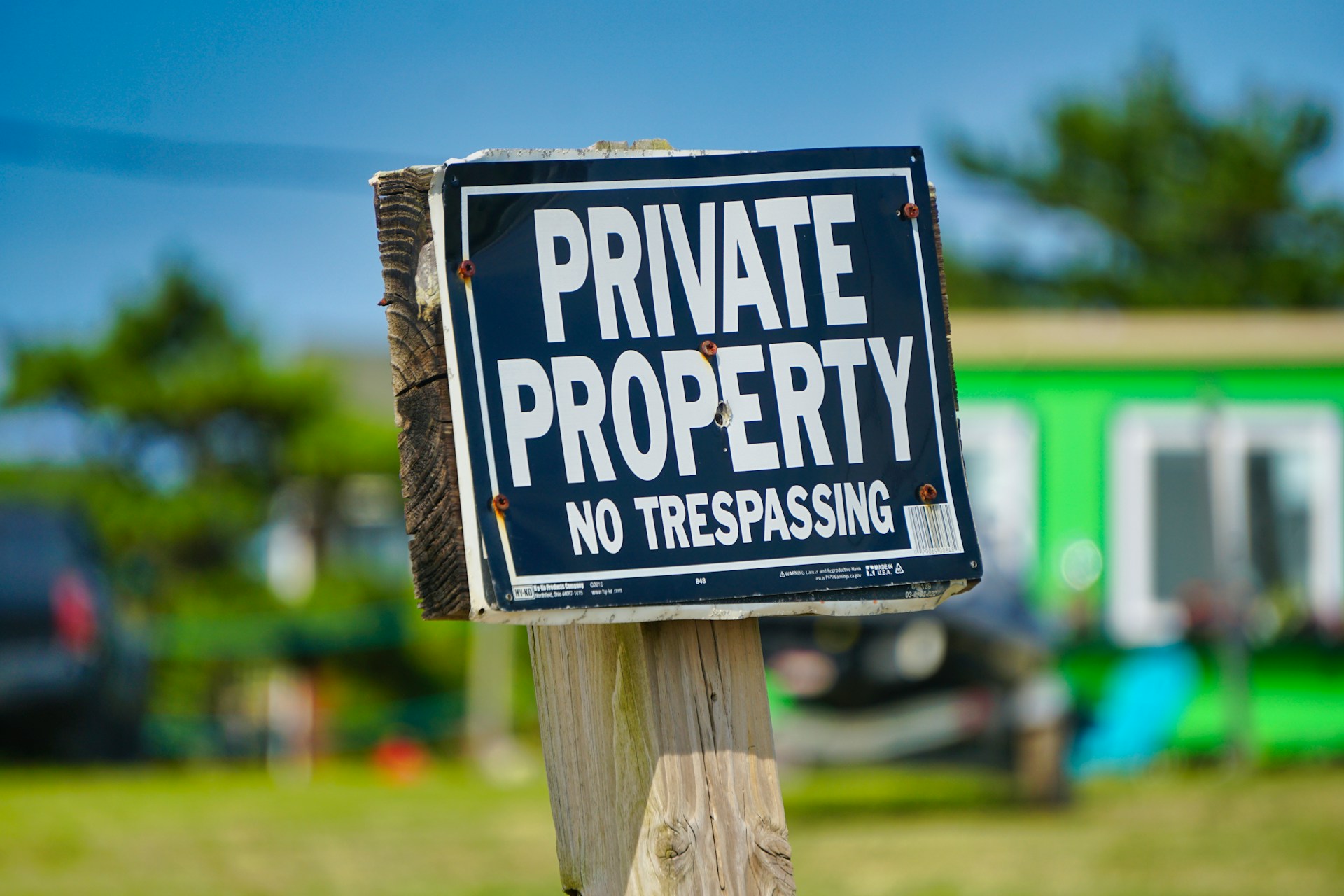
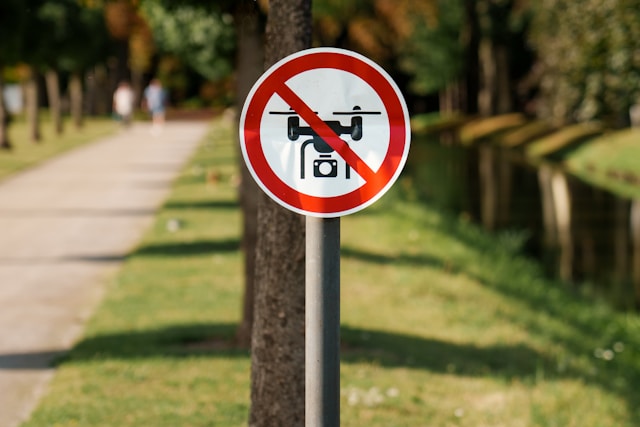
One more thing: if you’re a property owner concerned about drones, you can put up signs or inform local drone clubs that you don’t consent to drone flights over your yard – while not legally binding, it puts pilots on notice that you’ll be vigilant.
Who Pays for Damage If a Drone Hits Private Property?
If a drone crashes into private property and causes damage, the drone operator is generally responsible for paying for the damage. It works similarly to if you accidentally threw a baseball through someone’s window – you or your liability insurance should cover the cost. Drone pilots are expected to operate safely and are liable for what their drone does. If your drone damaged a house (broke a window, damaged a roof tile) or, worse, injured someone on that property, you should offer to pay for repairs and medical bills.
Sometimes the homeowner’s insurance might cover initial damage to their property (for example, if they have coverage for falling objects or such), but their insurer will likely come after you (subrogation) anyway, or at least your insurance. If you have drone insurance, that can cover it; if not, it’s coming out of your pocket. For injuries, your personal liability or drone insurance would need to cover it. As a pilot, it’s smart to have at least a basic drone liability policy if you fly around people’s property, because accidents can happen. On the flip side, if someone else’s drone crashed into your property, you could pursue them to pay for the damage.
One way or another, the operator (or their insurance) pays when a drone causes damage.
Is It Legal to Shoot Down a Drone That’s Spying on Me?
No, it is not legal to shoot down a drone in almost all circumstances. As mentioned earlier, drones are considered aircraft under law, and shooting at one is a crime. Even if a drone is being a nuisance or you suspect it’s spying, you must go through legal avenues (police, FAA, etc.), not use force. Discharging a firearm at a drone could also violate local gun laws (like firing a weapon within city limits, endangering others, etc.).
The penalties can be severe: in the U.S., destruction of an aircraft can lead to fines up to $250,000 and imprisonment. And you’d likely be on the hook for the cost of the drone itself to the owner. It’s just not worth it. Instead, focus on collecting evidence and reporting the drone as described above. There are rare cases where only authorized entities (like law enforcement or the military) can neutralize a drone – and that’s usually in high security areas or dangerous situations, not a typical backyard scenario. So no matter how violated you feel by a drone, do not shoot it, jam it, or try to knock it out of the sky. Protect your rights through legal methods.
How Low Can I Legally Fly My Drone Over Someone’s Property?
There’s no universal hard number for the minimum altitude, but a good guideline is to stay at least 90 to 100 feet (30 meters) above someone’s private property if you don’t have permission. The FAA hasn’t set a specific “floor” for drone flight above private land – they simply say you can’t endanger people or property. However, if you fly very low (say under 50 feet) over someone’s yard without permission, you open yourself up to potential trespass or harassment claims, especially if you’re hovering or repeatedly doing it. The first ~50–100 feet above the ground is where property owners have the strongest rights (the “immediate reaches” of airspace).
To be safe, keep some altitude unless you have a reason to be lower and ideally the owner’s OK. If you absolutely must fly lower (maybe for an inspection job), get the owner’s consent in advance. Also, flying low increases the risk of collision with structures (trees, wires) and startling people or animals – another reason to avoid it. So while you won’t find an exact legal height limit in the rulebooks, give people plenty of overhead clearance to respect their privacy and avoid seeming like you’re intruding. When in doubt, higher is better.