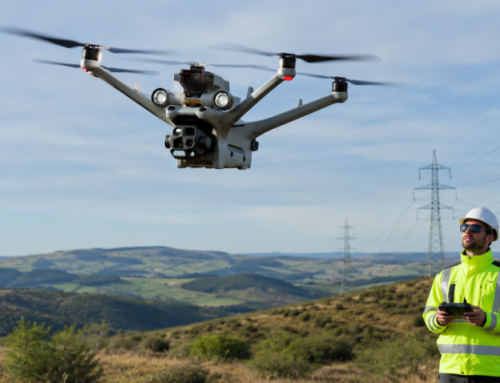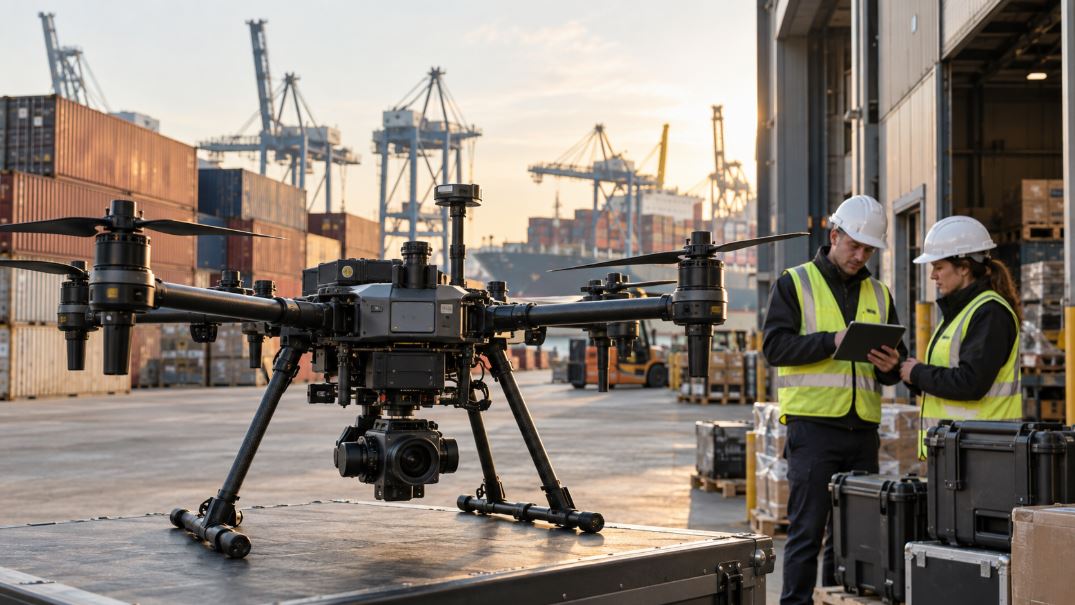
Counter-drone systems work best when you match the sensor type to the environment and the threat, then layer sensors instead of betting on a single “magic” detector. In most real sites, radio frequency detection, radar, and electro-optical infrared cameras each solve different parts of the problem, and the most reliable setups fuse two or more. Before you buy or deploy anything, confirm what you’re legally allowed to do, because many “active” countermeasures are restricted to authorized authorities in many countries.
Counter-UAS (C-UAS) means tools and workflows used to detect, track, identify, and sometimes mitigate (stop or disrupt) a suspicious unmanned aircraft system (UAS). Most organizations should think in three layers:
- Detect: Is something in the air that could be a drone?
- Track and identify: Where is it, what is it, and is it authorized?
- Respond: Escalate safely and legally (often to security, law enforcement, or aviation stakeholders).
We can group the main detection sensor families into RF, radar, EO IR, and acoustic. And you need to select a mix of modalities that fits your terrain, staffing, and threat model.
RF detection vs Radar vs Optical: What each does best
RF detection
What it is: Passive listening for radio signals between a drone and its controller, or related emissions (and sometimes decoding known protocols).
Where it works best:
- Urban sites where you need early warning of consumer drones (when they are actually transmitting)
- Perimeter security where you want direction finding and “operator location” clues
Where it struggles:
- Autonomous flights with minimal link activity
- Environments with heavy RF noise
- Drones using uncommon links or operating “dark” (no detectable control link)
Typical strength: Great at early detection and classification when signals are present, but not guaranteed.
Radar
What it is: Active sensing that detects objects by reflected energy, often used to track small moving targets.
Where it works best:
- Open perimeters (airfields, industrial sites, coastal facilities)
- Scenarios where you need consistent tracking even if the drone isn’t transmitting
Where it struggles:
- Dense clutter (trees, buildings) and complex reflections
- Very small drones at low altitude among birds and background motion
Typical strength: Strong for tracking and coverage, but it usually needs another sensor to confirm “that is a drone.”
Optical and EO IR cameras
What it is: Visual cameras (electro-optical) and thermal/infrared cameras used to visually confirm and sometimes classify a target.
Where it works best:
- When you need positive visual confirmation for decision-making
- Site monitoring where you can point cameras using radar/RF cues
Where it struggles:
- Poor visibility (fog, rain, glare) and long-range identification limits
- Operator workload if you rely on humans watching screens
Typical strength: Best for confirmation and evidence, not for wide-area first detection.
Deployment fit: What works where
Use this as a fast “fit check” before you compare vendors or write an RFP.
Busy city center or public venue
- Start with RF + EO for quick cueing and visual confirmation
- Add radar if you have clear lines of sight and need more dependable tracking
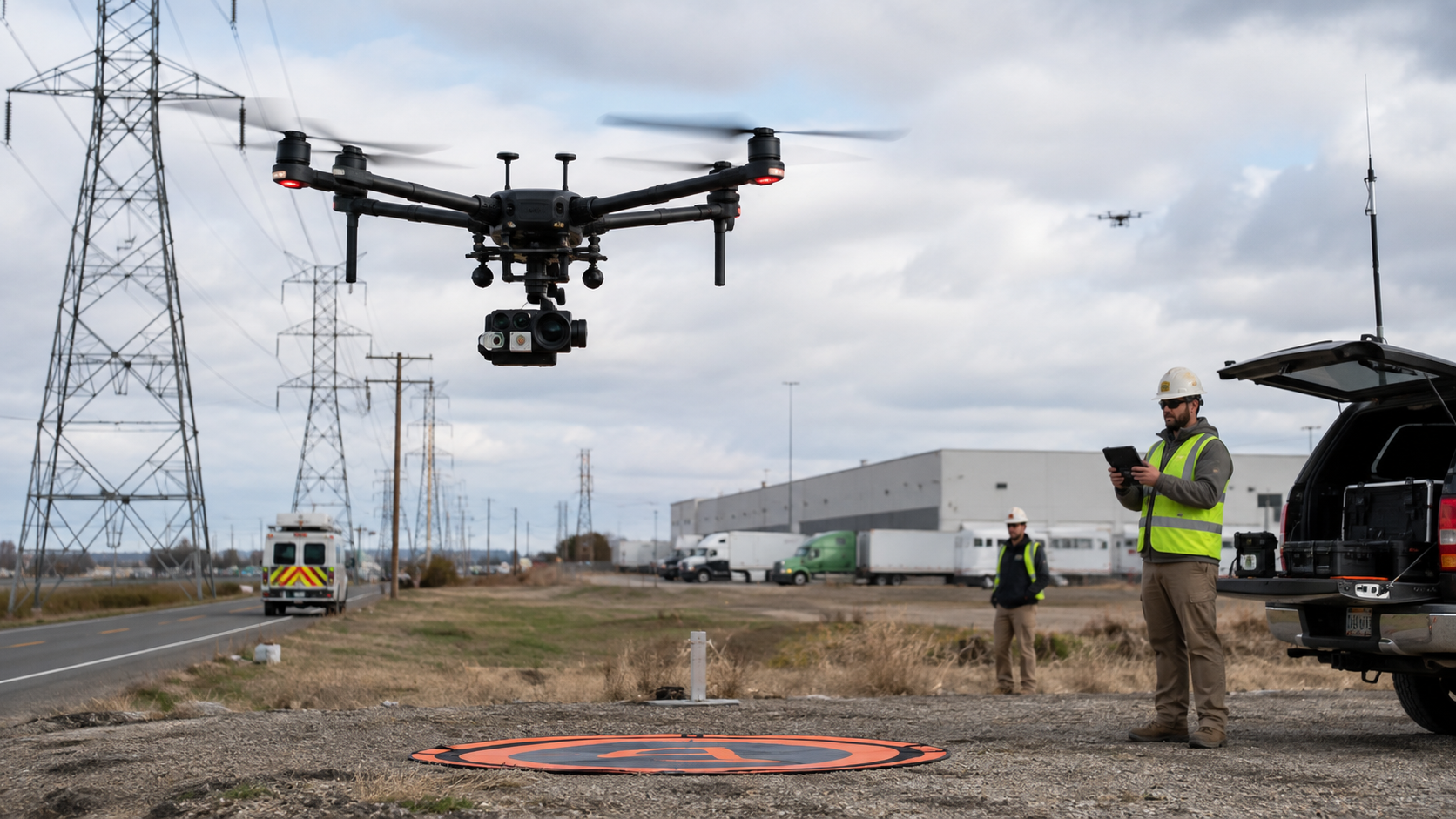
Sensor choice should match environmental realities and site needs.
Industrial perimeter and critical infrastructure
- Radar + EO IR is a common backbone for tracking plus confirmation
- Add RF to improve classification and potentially infer controller direction
DHS’s C-UAS purchasing tool is built around comparing systems by mission, environment, and sensor mix.
Airports and aerodromes
- You need procedures as much as technology. The FAA requires Part 139 airports to have an approved UAS response plan within their Airport Certification Manual.
- EASA has published aerodrome-focused drone incident management guidance emphasizing coordination and safety risk management.
Risks, safety notes, and common mistakes
- Assuming one sensor will do everything. CISA and FAA committee work both point to multi-sensor approaches (RF, radar, EO IR, acoustic) as common in real evaluations.
- Ignoring staffing reality: Cameras need cueing and someone trained to interpret what they’re seeing.
- Overlooking “friendly drones”: If your site already uses drones (roof surveys, inspections), you need an authorization process so your system doesn’t trigger constant false alarms.
- Buying mitigation before legal review: This is where organizations get into trouble fastest.
Rules by Region About Jamming and “Counter-Drone” Mitigation
U.S.
In the U.S., the biggest legal trap is that many “counter-drone” tools work by interfering with communications or accessing systems you do not own. Federal agencies have warned (in a joint legal advisory) that UAS detection and mitigation can trigger multiple federal statutes at the same time, depending on what the technology actually does (jam, spoof, take control, intercept data, etc.).
1) “Jamming” (and most interference) is broadly illegal for non-authorized users
Two core Communications Act provisions matter here:
- 47 U.S.C. § 333: No person may willfully or maliciously interfere with (or cause interference to) any authorized radio communications (licensed stations or U.S. Government communications). This is a broad prohibition that maps directly onto what most jammers do: they disrupt a link on purpose.
- 47 U.S.C. § 302a: It is unlawful to manufacture, import, sell, offer for sale, or ship devices that do not comply with FCC rules and that can cause harmful interference (among other requirements). In practice, “jammers” are not the kind of devices the FCC authorizes for general use, so selling or deploying them tends to collide with this framework.
A lot of people miss that the risk is not only “pressing the button.” The law and FCC rules also target marketing and sales:
- 47 C.F.R. § 2.803 restricts marketing of radiofrequency devices unless they meet FCC authorization requirements (and “marketing” is defined broadly, covering advertising, offering for sale, etc.). That matters because many jammer-style products are illegal to market in the first place.
2) Enforcement exposure: civil forfeitures, seizure, and potential criminal cases
The FCC is a civil enforcement agency with authority to issue forfeiture penalties (civil fines) for Communications Act violations, and those maximum penalty amounts are inflation-adjusted and updated periodically.
Separately, the interagency advisory highlights that certain conduct can also create criminal exposure depending on method and impact (for example, interference with protected communications, intentional damage, or hacking/interception-style conduct).
Even if a vendor describes a product as “safe,” “non-destructive,” or “for security,” if the mechanism is jamming/interference (or “taking control” of communications), you are in a zone where FCC enforcement (civil penalties and equipment seizure) is realistic, and criminal statutes may also be implicated in some circumstances.
3) “Counter-UAS authority” is not general permission for private actors
One reason this issue is confusing is that the U.S. does have counter-UAS legal authorities, but they are limited and tied to specific federal agencies and defined missions. Legality often turns on who you are (which agency, what authority) and what you are doing (detecting vs. mitigating; passive monitoring vs. interference).
So private entities generally do not have a blanket right to jam, spoof, or “disable” a drone, and vendors should be able to clearly explain how their approach avoids triggering Communications Act problems (and other federal laws) or what specific authority they rely on.
For procurement/compliance, the U.S. rule set pushes you to ask very specific questions of any “counter-drone” vendor:
- Does the solution transmit anything that could interfere with radio links? (If yes, that’s where §333 risk lives.)
- Does it involve devices that must be FCC-authorized (and are they)? (That’s where §302a and §2.803 issues start.)
- Is the vendor relying on a narrow government authority (and can they cite it), or are they selling to private sites as if it’s generally permitted?
4) Only limited federal agencies have specific counter-UAS authority
Congress has given limited counter-UAS authority to Defense, Energy, Justice, and Homeland Security (with FAA roles around testing/coordination).
Those authorities are tied to specific statutes, including:
- 6 U.S.C. § 124n and 6 U.S.C. § 124o (DHS and DOJ authorities in certain circumstances)
- 10 U.S.C. § 130i (DoD authority for certain facilities and assets)
If you’re a private site (stadium, factory, data center, utility, venue): your safest legal posture is usually detect, document, and coordinate (local law enforcement, venue security protocols), not disrupt.
If you’re a public agency: you still need to confirm you actually have statutory authority for the specific action and tech, not just operational need.
If you’re an airport: FAA guidance emphasizes response planning and coordination for unauthorized UAS events (and airports may have specific plan requirements depending on certification context).
Review U.S. fundamentals in Key FAA Drone Regulations Every U.S. Pilot Should Know
U.K.
In the U.K., “jamming” is treated as deliberate interference with wireless communications, and the default legal position is simple: it is illegal unless you have specific authority.
1) The Core Rule: Deliberate Interference Is A Criminal Offence
Ofcom (the U.K. communications regulator) states that deliberately interfering with wireless telegraphy is an offence, and explicitly lists jammers as the kind of device that can create this unlawful interference.
Ofcom’s guidance also makes an important practical point: jammers are often marketed as “local” solutions (cinemas, theatres, exam halls, libraries), but they can affect wider areas and other frequencies beyond what the user intends.
2) “We Don’t Authorise Jammers” (What “Unless Authorised” Really Means)
Even though the law uses “unless authorised” language, Ofcom’s public guidance is clear: Ofcom does not authorise the use of jammers in ordinary private or commercial settings.
So, if someone on a private site says “we can just jam it,” the legal reality is that this is not a normal option you can self-approve. You would need a specific legal authorisation pathway, and Ofcom’s published position is that it does not authorise jammer use as a general matter.
3) Penalties: Prison Time And Unlimited Fines
Ofcom’s guidance highlights the potential consequences for unlawful interference/jamming:
- Up to 2 years’ imprisonment, and/or
- an unlimited fine
(Those are maximums; courts decide outcomes based on facts, harm caused, intent, and prior history.)
Ofcom actively investigates serious spectrum abuse and can escalate cases through enforcement.
4) Detection and privacy constraints
Counter-drone “detection” often involves cameras, RF sensing, and logging identifiers. If that processing can identify a person (directly or indirectly), you’re in data protection territory:
UK data protection is governed by UK GDPR and the Data Protection Act 2018.
Also, if a system crosses into intercepting communications or “equipment interference,” that can raise issues under the Investigatory Powers Act 2016, which is built around state/public authority powers and oversight.
For private venues and businesses, plan around non-interfering detection + escalation rather than disruption. For public authorities, you still need the right authorisations and governance, especially where communications or surveillance powers are implicated.
EU EASA region
EASA is focused on aviation safety. Its public “Drone Incident Management at Aerodromes” guidance is mainly about preparedness, coordination, and managing disruption near airports, not giving blanket permission for mitigation tools.
Mitigation permissions vary significantly by country because counter-UAS often sits at the intersection of:
- civil aviation safety (EASA and national aviation authorities),
- public security (interior ministries, police),
- and telecommunications regulation (national spectrum regulators).
So, even if a capability is technically possible, whether you’re allowed to deploy it can be national-law specific.
1) Jamming is commonly prohibited except narrow state exemptions
A very clear example from an EU Member State is France:
The French spectrum regulator (ANFR) states jammers are prohibited (importation, advertising, sale, possession, and use) under Article L.33-3-1 of the French postal and electronic communications code, with criminal sanctions referenced under Article L.39-1.
This is a good “model example” of how EU countries treat jamming: typically illegal for private actors, sometimes allowed only under tightly controlled government exemptions.
2) Privacy rules can apply to detection
If your detection stack uses cameras or collects data that can identify individuals, EU-wide rules like:
- GDPR Regulation (EU) 2016/679 may apply, and communications confidentiality can also be relevant under:
- Directive 2002/58/EC (ePrivacy Directive)
If you operate across multiple EU countries, assume you need a country-by-country legal and regulatory check before using anything beyond passive detection.
Around aerodromes, align to incident management coordination practices and local authority procedures first, not “tech-first” mitigation.
Rule of thumb for any region
If your counter-drone system does any of the following, treat it as high legal risk unless you have explicit authority:
- RF jamming or any intentional interference with radio services
- GNSS interference (GPS disruption or spoofing)
- Taking control of a drone or forcing it to land (mitigation)
- Intercepting communications between pilot and drone
And always confirm with your aviation authority.
FAQs About Counter Drone Systems
Is RF detection enough on its own?
Usually not. RF can miss autonomous or low-emission scenarios, so many real deployments pair it with radar and or EO IR for confirmation.
Why do many sites start with detect and verify instead of mitigation?
Because the legal and safety constraints on “active” countermeasures are significant in many regions, and detection plus documented response is often the most realistic foundation.
What sensor is best for wide area tracking?
Radar is commonly used for persistent tracking over wider areas, especially in open environments, but it typically needs EO IR or other data to confirm the target.
Do cameras replace radar?
Not usually. Cameras are excellent for confirmation, but they are not ideal as the only wide-area first detector.
Are counter-drone systems different at airports?
Yes. Airports typically rely on formal response plans, coordination, and careful safety procedures, not just sensors.
Also Read: Can Private Security Shoot Down Drones?